Dark Horses
Morocco were 150/1 to reach the World Cup semi-finals in 2022. By the time they...

 Available in US
Expert World Cup 2026 betting analysis for Irish punters. Outright odds, group predictions, and value tips for the expanded 48-team tournament in USA, Mexico & Canada.
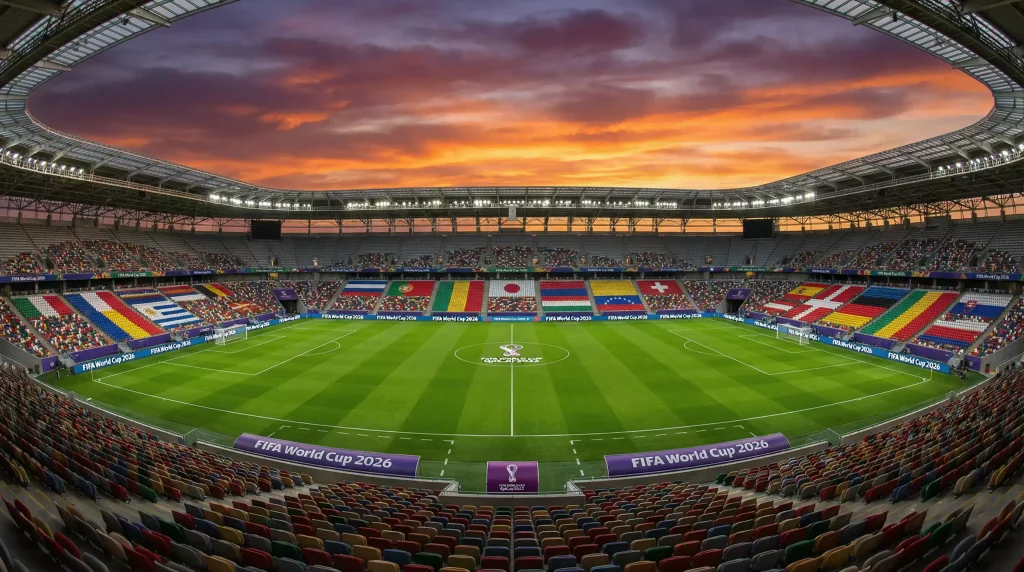
Forty-eight teams. One hundred and four matches. Thirty-nine days of football across three nations. The 2026 FIFA World Cup in the United States, Mexico, and Canada represents the most dramatic expansion in tournament history — and with expansion comes opportunity. For those of us who study betting markets for a living, this new format presents both genuine value and carefully disguised traps.
I have covered three World Cups and five European Championships over the past nine years, watching the betting landscape shift from high-street betting shops to mobile apps that update odds in real time. The 2026 tournament demands a different analytical approach than anything we have seen before. With 16 additional teams, restructured knockout rounds, and matches spread across North American time zones that will test Irish punters' sleep schedules, the old assumptions simply do not apply.
For Irish punters still processing the heartbreak of that penalty shootout loss to Czechia in Prague — our third shootout failure in major tournament qualifying — this guide offers a path forward. Scotland's first World Cup appearance since 1998 gives us a Celtic connection worth following, while England's perpetual promise of glory provides the Premier League angle most of us live and breathe. The question is not whether to engage with World Cup 2026 betting, but how to do it intelligently.
What follows is my assessment of where value exists in the outright markets, which groups merit attention from a betting perspective, and how to navigate the unique challenges this expanded tournament presents. I present both sides of every argument because football has a habit of humbling anyone who deals in certainties. The smart money accounts for probability, not prediction.
Every World Cup since 1998 has featured 32 teams divided into eight groups. I have built betting models around this structure for nearly a decade. Then FIFA announced the expansion to 48 teams, and those models needed a complete overhaul. The 2026 tournament is not simply a larger version of what came before — it represents a structural transformation that affects every betting market from outright winner to group qualification.
The format change creates twelve groups of four teams rather than eight. Two teams from each group advance automatically, with the eight best third-placed finishers also qualifying for a new Round of 32 knockout stage. This means 32 of 48 teams — two-thirds of the field — will reach the knockouts. For punters accustomed to the tension of third-place permutations deciding group outcomes, this format amplifies that complexity by adding an entire tier of qualification scenarios.
Consider what this means in practical terms. A team finishing third in their group with four points might advance while another third-placed team with the same points total stays home, depending on goal difference calculations across all twelve groups. The betting implications are significant: backing a team to qualify for the knockouts becomes a different proposition when third place offers a realistic path through. Markets on "team to qualify from group" will carry different value profiles than in previous tournaments.
Did you know? Curaçao, with a population of approximately 150,000 people, becomes the smallest nation by population ever to qualify for a World Cup — smaller than some Dublin suburbs. They face Germany, Ivory Coast, and Ecuador in Group E.
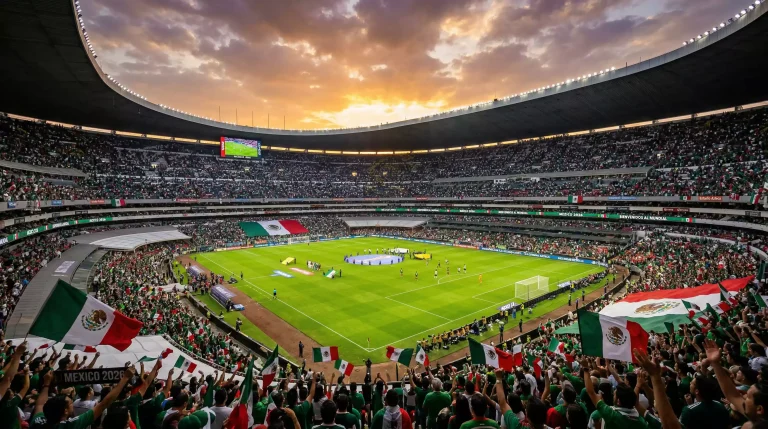
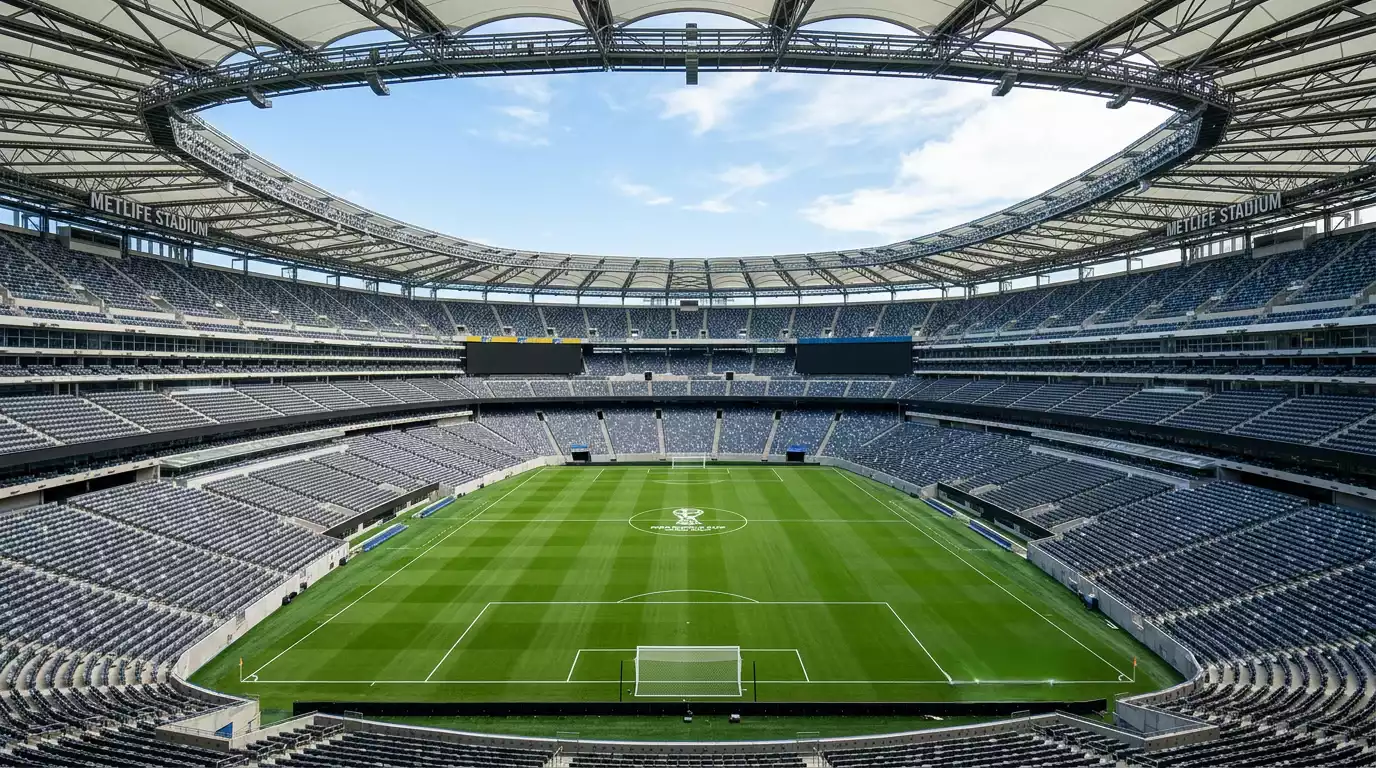
The tournament spans 39 days from the opening match on June 11 to the final on July 19, 2026. That is six days longer than the 2022 World Cup in Qatar and creates additional fatigue considerations for teams progressing deep into the knockouts. Estadio Azteca in Mexico City hosts the opening fixture between Mexico and South Africa — a venue that has seen two previous World Cup finals and carries atmospheric advantages for the home nation. MetLife Stadium in New Jersey, with its 82,500 capacity, stages the final in what will be the largest crowd for a World Cup final since the Rose Bowl hosted the 1994 showpiece.
The geographic spread across three nations introduces travel logistics that favour certain bracket positions. Teams based primarily in the western United States face different conditions than those playing eastern seaboard fixtures. Climate variations between venues in Mexico City, Seattle, and Miami will suit some squads better than others. These factors rarely surface in mainstream betting analysis but influence match outcomes in ways that sharper punters can exploit.
Tournament football has always differed from league competition in its emphasis on defensive organisation and knockout mentality. The expanded format potentially dilutes this by ensuring even underperforming group-stage teams can survive. Whether this benefits attacking sides who might start slowly — Brazil historically take time to warm up — or defensive specialists who grind out low-scoring results remains one of the central analytical questions heading into June 2026.
The 48-team format fundamentally alters qualification mathematics. With two-thirds of teams advancing to knockouts, the risk profile of backing dark horses to escape group stages shifts meaningfully — a factor the betting markets have not fully priced.
For Irish punters, the practical reality involves matches kicking off in the United States at times that translate to late night and early morning viewing. A 9pm Eastern Time kickoff in New Jersey means 2am Irish Summer Time. The tournament's scheduling acknowledges this challenge for European audiences, but the bulk of meaningful fixtures will fall outside conventional viewing hours in Ireland. This shapes betting strategy: ante-post markets and next-day analysis become more relevant when live viewing proves difficult.
The 104 total matches across group stage and knockouts represent the most extensive World Cup schedule ever attempted. The commercial reality behind this expansion is that television rights and sponsorship revenues scale with match volume. But for punters, more matches mean more data, more opportunities, and more potential for finding mispriced odds as bookmakers spread their analytical resources across an unprecedented fixture list.
A punter in my local asked me last week who wins the World Cup. I told him I have been wrong about outright winners more often than I have been right, and that honesty is worth more than false confidence. What I can offer is a structured assessment of the market leaders, their strengths and vulnerabilities, and where the value might actually sit.
France and Argentina dominate the outright market, trading around 9/2 and 5/1 respectively with most GRAI-licensed bookmakers operating in Ireland. These prices reflect two different narratives: France as the most talented squad in world football, and Argentina as defending champions riding the final chapter of Lionel Messi's international career. Both cases have merit. Both have significant counter-arguments.
The case for France: Kylian Mbappé, now firmly established at Real Madrid, leads a generation of French talent that includes genuine world-class options in every position. They reached consecutive World Cup finals in 2018 and 2022, winning the former and narrowly losing the latter on penalties. Didier Deschamps' tactical flexibility allows France to absorb pressure or impose themselves depending on opposition. Their depth means injuries rarely derail them. On pure talent evaluation, France arguably fields the strongest squad in the tournament.
The case against France: Experience of reaching finals does not guarantee winning them, and France's near-collapse against Argentina in Qatar — throwing away a two-goal lead before eventually losing on penalties — suggests vulnerabilities under the most intense pressure. Internal tensions within the squad have surfaced periodically, and the weight of expectation from French media creates an environment where underperformance feels inevitable. The market has priced France accurately as co-favourites; the question is whether that price offers value.
The case for Argentina: Defending a World Cup title would place Argentina alongside Brazil's 1962 side as the only teams to retain the trophy in the post-war era. Messi at 38 still influences matches differently than any other player, and the supporting cast of Julián Álvarez, Enzo Fernández, and an experienced defensive unit represents championship-calibre balance. The emotional narrative of sending Messi out as a two-time champion adds intangible motivation. Manager Lionel Scaloni has built genuine cohesion over multiple years.
The case against Argentina: Messi's age represents an obvious concern. The intensity of modern tournament football across a 39-day window tests physical durability in ways that skill cannot entirely compensate for. Argentina's over-reliance on their captain creates a single point of failure — if Messi picks up an injury or simply cannot replicate his Qatar performances, the team's entire attacking identity shifts. History also works against them: no nation has successfully defended a World Cup title since Brazil in 1962.
| Nation | Outright Odds | Group | Key Player |
|---|---|---|---|
| France | 9/2 | I (Senegal, Norway, Iraq) | Kylian Mbappé |
| Argentina | 5/1 | J (Algeria, Austria, Jordan) | Lionel Messi |
| England | 13/2 | L (Croatia, Ghana, Panama) | Jude Bellingham |
| Brazil | 7/1 | C (Morocco, Scotland, Haiti) | Vinícius Jr |
| Spain | 8/1 | H (Saudi Arabia, Cape Verde, Uruguay) | Lamine Yamal |
| Germany | 12/1 | E (Curaçao, Ivory Coast, Ecuador) | Florian Wirtz |
England at 13/2 represents the market's third choice, reflecting both genuine squad quality and the perpetual hope that "this time might be different." Jude Bellingham's emergence as a genuine Ballon d'Or contender elevates England's creative ceiling, while the core of Manchester City and Arsenal players provides tactical coherence. Their Group L draw — Croatia, Ghana, Panama — offers a path to the knockouts that avoids the brutality facing Scotland in Group C.
Brazil at 7/1 and Spain at 8/1 round out the genuine contenders. Brazil's 20-year wait since their last World Cup victory creates pressure that has historically undermined their tournament performances, while Spain's Euro 2024 triumph demonstrated a tactical evolution under Luis de la Fuente that makes them dangerous opponents for any team. Germany at 12/1 offers dark horse value if their recent improvement under Julian Nagelsmann continues, though consecutive group-stage exits in 2018 and 2022 give legitimate cause for skepticism.
The argument against expansion runs through every discussion of World Cup 2026 betting: more teams means weaker teams, which means predictable group stages where favourites cruise through. I have seen this take repeated across betting forums and pub conversations alike. The reality, as usual, is more nuanced.
The myth: Forty-eight teams necessarily dilutes the competitive quality of the tournament. Matches featuring debutants like Curaçao, Cape Verde, Jordan, and Uzbekistan will produce embarrassing scorelines that serve no purpose beyond television revenue. The group stage becomes a formality rather than a genuine test, diminishing the tournament's prestige and making betting on favourites risk-free.
The reality: World Cup history provides abundant evidence that "weaker" nations cause upsets with remarkable regularity. Saudi Arabia defeated Argentina in the 2022 group stage. Senegal eliminated France in 2002. South Korea reached the semifinals in the same tournament, beating Spain and Italy along the way. The assumption that expanded fields equal predictable outcomes ignores how international football actually functions — national teams play together far less frequently than club sides, creating tactical variations that even significant talent gaps cannot entirely overcome.
The structure of this World Cup further complicates the dilution argument. With third-place finishers qualifying for the knockouts, the pressure on established nations to top their groups creates genuine jeopardy. A team focused on winning their group to secure a favourable knockout draw might underestimate an opponent capable of snatching a result. The mathematical reality of 32 teams advancing means that even nations entering as rank outsiders have realistic paths to the Round of 32 — and knockout football is its own discipline where anything can happen over 90 minutes.
Consider Group E, where Germany faces Curaçao alongside Ivory Coast and Ecuador. The narrative suggests Germany should dominate, but their recent tournament record includes consecutive group-stage eliminations. Ivory Coast, AFCON 2024 winners, bring genuine quality. Ecuador pushed Argentina close at the 2022 World Cup. Curaçao represents a genuine underdog story, but even their presence creates an element of unpredictability that betting markets may not fully capture.
From a betting perspective, the expansion creates inefficiencies rather than certainties. Bookmakers spreading resources across 48 teams and 104 matches cannot price every market with the same precision they bring to club football. The casual narrative that favourites will cruise home ignores both historical precedent and the specific competitive dynamics this format introduces. Sophisticated World Cup 2026 betting recognises that more teams means more opportunities — not fewer.
Tournament expansion historically correlates with upsets, not foregone conclusions. The 1998 expansion to 32 teams produced shock results that reshaped betting approaches. The 2026 format will likely follow similar patterns, creating value for punters willing to back unfashionable outcomes.
Twelve groups present twelve different puzzles, but not all puzzles are worth solving from a betting perspective. I spend most of my analysis time on groups where the market prices diverge from my assessment of true probabilities — where bookmakers have priced outcomes that strike me as either too generous or too stingy. The expanded format creates natural categories: Groups of Death where qualification appears genuinely contested, Groups of Life where favourites should progress comfortably, and everything in between where the betting value actually sits.
Group C stands out immediately as the tournament's most brutal draw. Brazil, Morocco, Scotland, and Haiti share a group that punishes any misstep. Brazil carry the weight of expectation as five-time champions who have not won the tournament since 2002. Morocco reached the 2022 semifinals and added AFCON 2025 glory to their credentials. Scotland return to the World Cup for the first time since France 1998, carrying hopes of a nation desperate to see their team on football's biggest stage. Haiti represent the feel-good debutant story, but realistically offer the other three teams their most likely source of points.
The betting markets price Brazil as heavy group favourites to finish first, with Morocco competitive for second place and Scotland fighting for third. The mathematics of this format — where third place can still qualify — gives Scotland a realistic path to the knockouts that the traditional 32-team structure would have denied them. Whether that path represents betting value depends entirely on how you assess their chances of beating Morocco directly or finishing level on points with a superior goal difference.
Group L presents a different picture entirely. England, Croatia, Ghana, and Panama form a draw that England will feel quietly satisfied with, despite the official protestations that every opponent deserves respect. Croatia's golden generation has aged significantly since their 2018 final and 2022 third-place finish, though Luka Modrić at 40 still influences matches in ways that defy physical logic. Ghana bring unpredictability without the recent tournament pedigree that Morocco possess. Panama return to the World Cup after their 2018 debut but lack the firepower to seriously trouble England across 90 minutes.
Did you know? Scotland's last World Cup match before 2026 was a 3-0 group-stage defeat to Morocco in France 1998. They face Morocco again in Group C — a fixture that carries 28 years of history and offers Scotland a chance to rewrite the narrative.
Group A deserves attention for Irish punters due to Czechia's presence. The team that eliminated Ireland on penalties in March 2026 faces Mexico, South Korea, and South Africa in a group where all four teams harbour genuine qualification hopes. Watching Czechia progress — or fail — carries an emotional dimension that makes betting on this group complicated. The rational approach separates emotional investment from analytical assessment, but I understand if some punters prefer to avoid Group A entirely.
Group I pairs France with Senegal, Norway, and Iraq in a draw that should produce French dominance but contains genuine complications. Norway's Erling Haaland finally reaches a major tournament after missing the 2022 World Cup, and his presence alone makes them a dangerous opponent for any side. Senegal possess the African pedigree to cause problems. Iraq's qualification through the intercontinental playoffs represents a historic achievement for a nation whose football has operated under extraordinary constraints. France should top the group, but the path to second place remains genuinely open.
Twenty-eight years. That is how long Scotland waited between World Cup appearances, a drought that outlasted entire playing careers and tested the patience of supporters who remember John Collins and Colin Hendry in France 1998. The qualification campaign that ended this wait — topping a group that included Spain — announced Scotland as a serious European force. Now comes the harder question: can they actually do something once they arrive?
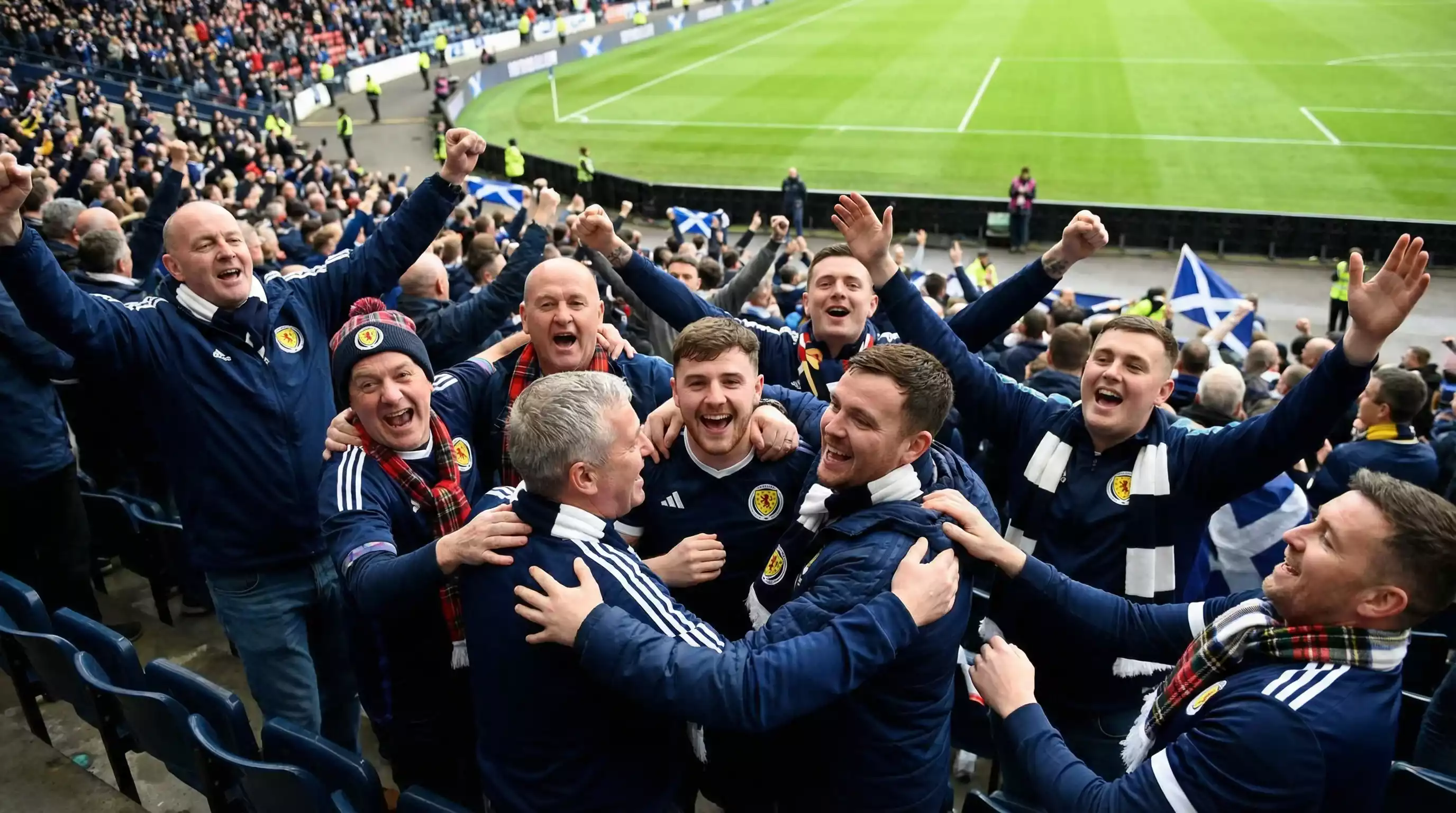
Group C offers no easy path. Brazil represent the most decorated team in World Cup history, Morocco are reigning African champions who embarrassed Spain and Portugal at the 2022 tournament, and even Haiti as debutants will present challenges. Steve Clarke's tactical approach — defensive organisation supplemented by Andy Robertson's marauding runs from left-back — serves Scotland well against superior opposition, but the mathematics of finishing above Morocco require something more than damage limitation.
The betting markets price Scotland around 40/1 to top Group C, reflecting both the difficulty of their draw and the lack of recent World Cup experience within the squad. More realistic markets focus on whether Scotland can qualify from the group in any position — which under the new format includes finishing as one of the eight best third-placed teams. This broadens their chances considerably and creates a betting proposition that differs substantially from backing them to win the group outright.
For Irish punters, Scotland represents the natural rooting interest. The Celtic connection between our nations, the shared experience of English football dominating our domestic viewing, and the genuine affection between supporters creates an emotional stake that purely analytical assessment cannot capture. Whether this translates to betting action depends on individual risk tolerance — backing Scotland carries sentimental appeal but requires acknowledging the probability that they exit in the group stage.
The fixtures matter significantly. Scotland open against Brazil in a match where stealing a point would represent a massive result. Morocco in the second fixture becomes the pivotal match — a game that likely decides whether Scotland advance or go home. Haiti in the final group game should represent three points, but nothing in international football comes guaranteed.
"Football's coming home" has become less prediction than punchline after decades of near-misses and penalty shootout trauma. Yet England's current squad represents arguably the most talented generation since their 1966 World Cup winners — and unlike previous golden generations that underperformed, this group has actually delivered results. The Euro 2024 final appearance, following the Euro 2020 final defeat and the 2018 World Cup semifinal, demonstrates progression rather than flattering to deceive. The question for punters is whether 13/2 fairly prices their genuine chances.
Group L offers England the kind of draw that previous English sides would have somehow managed to complicate. Croatia's threat level has diminished as Modrić, Ivan Perišić, and the 2018 generation approach football's natural endpoint. Ghana cause occasional upsets but lack the systematic quality to trouble England across a full match. Panama provided the most one-sided fixture of the 2018 World Cup when England won 6-1, and nothing suggests the gap has closed.
The analytical case for England centres on Jude Bellingham's ascent to genuine Ballon d'Or contention. His performances for Real Madrid have established him as one of the world's elite players, capable of controlling matches and producing decisive moments under pressure. Around Bellingham, England possess the depth to rotate across group fixtures — Phil Foden, Bukayo Saka, Cole Palmer, and Declan Rice all represent Champions League-level talent.
The counter-argument involves tournament psychology rather than squad quality. England have repeatedly failed to deliver when expectation reaches its peak, suggesting a mental barrier that coaching changes and generational transitions have not resolved. Harry Kane's continued absence from trophy cabinets despite extraordinary individual performance raises questions about whether England's best players genuinely possess the champion's mentality.
For Irish punters, England present a complicated proposition. The historical rivalry between our nations makes backing England feel uncomfortable for some, while others follow Premier League football closely enough that England represent their most familiar team. From a purely analytical standpoint, 13/2 represents reasonable value if you believe this squad has finally developed the psychological resilience to close out a major tournament.
England's path through Group L to the knockouts appears straightforward, but their tournament pedigree includes repeated failures from similar positions. The 13/2 price factors in both their squad quality and their historical tendency to disappoint when it matters most.
Walk into any high-street bookmaker from Dublin to Galway next June and the World Cup betting boards will feature dozens of markets spanning everything from outright winners to minute-by-minute goal scorers. Most punters stick with what they know — match betting and accumulators dominate public money — but the range of available markets creates opportunities for those willing to explore beyond the obvious.
The outright winner market attracts the most attention and carries the most risk. Backing a nation at the start of the tournament means tying up stake money for up to 39 days while every other team plays matches that could eliminate your selection. The appeal lies in the odds available: France at 9/2 returns €55 from a €10 stake if they lift the trophy, compared to far smaller returns from match-by-match betting on French victories. The trade-off between potential return and probability of success defines how serious punters approach outright markets.
Group betting offers more immediate resolution. Markets on group winners, teams to qualify, and group correct score predictions settle once the group stage concludes around June 28. The expanded format introduces a new dimension to these markets: with third-placed teams potentially qualifying, the question shifts from "will they finish top two?" to "will they be among the best eight third-placed sides?" This creates pricing inefficiencies that astute punters can exploit, particularly in groups where the third-best team projects to finish with a strong points tally.
Each-way betting — A bet split into two equal parts: one on the selection to win, another on the selection to place (typically top 2-4 depending on the market). If your selection wins, both parts pay out; if it places but does not win, only the place portion pays at reduced odds. Common in Irish betting culture through horse racing, each-way applies naturally to tournament outrights.
Match betting remains the bread and butter of World Cup wagering. Home, draw, away markets on individual fixtures allow punters to assess each match independently rather than committing to tournament-long positions. The key consideration for World Cup match betting involves adjusting for tournament context: group-stage matches often feature cautious approaches from teams managing qualification scenarios, while knockout matches produce higher stakes football that can go either way. Draw prices in World Cup matches historically offer value that casual punters overlook, particularly in fixtures between teams from similar ranking tiers.
Three quick tools for Irish punters: convert fractional odds and payouts, work out kickoff times in Irish Summer Time, and check each-way returns before you bet.
Implied probability is the bookmaker’s break-even chance for that outcome — it does not account for the bookmaker’s margin across the full market. Example: 9/2 with a €10 stake returns €55 total, €45 profit.
Based on the guide’s own conversion: ET fixtures run five hours behind Irish Summer Time, Mexico City fixtures six hours behind. A 9pm ET kickoff — typical for semi-finals and the final — lands at 2am in Ireland.
Each-way splits your stake into two equal parts: one on the win, one on the place. If your selection wins, both parts pay. If it only places, just the place part pays at reduced odds. Irish bookmakers typically pay top 2-4 places on tournament outrights, depending on the market.
Goals markets provide alternatives for punters who struggle to pick winners. Over/Under lines — typically set at 2.5 goals for most World Cup fixtures — allow you to bet on match outcomes without selecting a winning side. Tournament football tends toward defensive organisation in knockout stages, but group matches where teams require goals for differential calculations can produce higher-scoring affairs. The context of each fixture shapes whether overs or unders represent value.

Player markets range from Golden Boot (top scorer) predictions to individual match scorer bets. The Golden Boot market presents significant risk given that the winner often emerges from an unexpected nation whose journey extends deep into the knockouts. Kylian Mbappé and Erling Haaland head the betting, but the concentration of goals among fewer knockout fixtures means that one prolific group-stage scorer can steal the award. Harry Kane's six goals at the 2018 World Cup — most coming from penalty kicks — illustrated how the Golden Boot rewards opportunity as much as outright ability.
Accumulator betting combines multiple selections into a single wager where all selections must win for the bet to return. The appeal involves multiplied odds — backing three group-stage favourites at evens each returns 7/1 on an accumulator — but the mathematics work against punters over time. Each additional leg reduces the probability of success, and bookmaker margins compound across selections. Accumulators carry entertainment value that exceeds their expected return, a distinction worth understanding before building your slip.
The pub quiz question nobody wanted answered: what time is a 9pm kickoff in New York when you are sitting in Cork? The answer — 2am Irish Summer Time — explains why this World Cup presents unique challenges for Irish punters who prefer watching matches before placing live bets. The tournament structure accommodates North American audiences first, European viewers second.
Irish Summer Time runs from the last Sunday of March to the last Sunday of October, meaning the entire World Cup falls within IST (UTC+1). Eastern Time in the United States sits five hours behind during summer months. A typical US evening slot of 8pm Eastern becomes 1am in Ireland. The marquee 9pm Eastern fixtures — including semifinals and the final — kick off at 2am Irish time. Group-stage matches spread across earlier afternoon slots translate to late evening or overnight viewing in Ireland.
| US Kickoff (ET) | Irish Time (IST) | Typical Matches |
|---|---|---|
| 12:00pm | 5:00pm | Early group fixtures |
| 3:00pm | 8:00pm | Afternoon group fixtures |
| 6:00pm | 11:00pm | Evening group fixtures |
| 9:00pm | 2:00am | Prime time, knockouts, final |
Mexico-based matches offer slightly more favourable timing. Central Time — where Mexico City's Estadio Azteca sits — runs six hours behind Ireland. The opening match between Mexico and South Africa on June 11 kicks off in the evening local time, which still places Irish viewers in overnight territory but marginally earlier than east coast US fixtures.
The practical implication for betting strategy involves shifting focus from live markets to ante-post and next-day approaches. Waking up to discover Scotland lost 3-1 to Brazil at 2am limits your ability to have influenced the bet through in-play decisions. Instead, placing considered pre-match bets and accepting the outcome suits the time zone reality better than attempting to stay awake through every fixture.
Watch parties in pubs will inevitably form around the bigger fixtures, particularly England and Scotland matches. Some establishments will stay open late or open early to accommodate supporter demand. The social element of World Cup viewing — gathering with friends, sharing the tension, celebrating goals together — remains accessible even when the timing proves challenging.
Did you know? The 1994 World Cup — the last time the USA hosted — generated memorable moments for Irish viewers despite similar time zone challenges. Watching Ray Houghton's goal against Italy at 9pm Irish time remains one of the defining memories of Irish football.
Nine years of covering international tournament betting has taught me one consistent lesson: the smart money rarely agrees with public sentiment. When everyone backs England, England finds a way to disappoint. When everyone writes off an African or Asian side, that side produces the tournament's signature upset. World Cup 2026 betting rewards contrarian thinking and probabilistic assessment over emotional conviction.
My assessment of the outright market identifies Spain at 8/1 as the most attractive proposition among genuine contenders. Their Euro 2024 triumph demonstrated tactical evolution under Luis de la Fuente that addresses previous shortcomings in knockout matches. Lamine Yamal, still a teenager, plays with the creativity and composure that defines generational talents. Rodri, Pedri, and Dani Olmo provide midfield control that rivals any nation. Spain's group — Saudi Arabia, Cape Verde, Uruguay — presents challenges but nothing approaching the brutality facing Brazil. The market prices Spain below England despite a more recent major trophy and arguably superior tactical identity.
Among dark horses, Morocco at 20/1 offers value that their 2022 performance and subsequent AFCON victory justifies. They reached the semifinals in Qatar by beating Spain and Portugal, not through a kind draw. The squad has matured since then, with Achraf Hakimi and Sofiane Amrabat among the best in their positions globally. At 20/1, the expected value calculation favours consideration.
For purely sentimental investments, Scotland at 100/1 to win the tournament carries obvious appeal for Irish punters. This is not a value assessment — Scotland genuinely face enormous challenges — but acknowledgment that some bets serve purposes beyond expected return. A small stake on Scotland provides something to cheer for across the tournament. Adjust stake sizes accordingly: this is entertainment money, not investment capital.
The markets I actively fade include backing favourites at current prices. France at 9/2 and Argentina at 5/1 accurately reflect their chances without offering sufficient margin for error. England at 13/2 prices in their squad quality but carries the psychological baggage of decades of underperformance. Brazil at 7/1 have not won a World Cup knockout match beyond the Round of 16 since 2002. These nations will receive significant public money; sharp punters look elsewhere.
Value exists outside the market leaders. Spain's tactical cohesion and recent major trophy, Morocco's proven knockout pedigree, and select group-stage betting opportunities offer better expected returns than backing co-favourites France and Argentina at their current prices.
The expanded format creates opportunities in group-stage markets that traditional World Cup structures did not offer. Backing outsiders to finish third in their groups — with qualification to the knockouts still possible — represents a new betting angle. Teams like Japan, USA, and Uruguay might finish third while still advancing, creating each-way and place-market opportunities the 32-team format would not have supported. The markets have not fully adjusted to these structural changes, leaving edges for punters who understand the implications.
Ultimately, World Cup 2026 betting requires acknowledging that nobody genuinely knows what will happen when 48 nations compete over 39 days. Diversifying across multiple markets, managing stake sizes to survive inevitable losing runs, and maintaining discipline when emotional investment conflicts with analytical assessment: these principles matter more than any individual selection.
The expanded format creates 12 groups of four teams instead of the traditional eight groups. Two teams from each group qualify automatically, with an additional eight spots going to the best third-placed finishers. This means 32 of 48 teams — two-thirds of the field — reach the knockouts, fundamentally changing qualification probability calculations. Markets on "team to qualify from group" now include third-place scenarios, creating new betting angles that the traditional format did not offer. Bookmakers are still adapting their pricing models to this structural change, potentially leaving value in group-stage markets.
Irish bookmakers primarily display fractional odds — expressed as ratios like 5/1, 7/2, or 11/8 — reflecting the traditional format used in horse racing and sports betting across Ireland and the UK. Most licensed operators also offer decimal odds as an alternative, which younger punters increasingly prefer. You can typically toggle between formats in your account settings. Fractional odds show profit relative to stake: 5/1 returns €5 profit for every €1 staked, plus your original stake back. Decimal odds show total return: 6.00 returns €6 for every €1 staked, including your stake.
No. Under the Gambling Regulation Act 2024 and subsequent GRAI enforcement from February 2026, credit card deposits for gambling are banned in Ireland. This includes funding e-wallets with credit cards and then transferring to betting accounts — the regulation targets the original funding source. Debit cards, bank transfers, and compliant e-wallet funding methods remain available. This restriction exists to protect consumers from accumulating gambling-related debt. All GRAI-licensed bookmakers must comply with this requirement.
Most World Cup 2026 matches will fall between 5pm and 2am Irish Summer Time, depending on venue location across the United States, Mexico, and Canada. Prime-time US fixtures — including semifinals and the final at MetLife Stadium — kick off at 9pm Eastern Time, translating to 2am in Ireland. Group-stage matches spread across earlier time slots offer more accessible viewing, with some afternoon fixtures in the US beginning at 5pm or 8pm Irish time. The opening match between Mexico and South Africa on June 11 at Estadio Azteca will kick off in late evening Irish time.
Yes. Scotland qualified for World Cup 2026 after topping UEFA Group A ahead of Spain, ending a 28-year absence from the tournament since France 1998. They were drawn into Group C alongside Brazil, Morocco, and Haiti — widely regarded as the tournament's most difficult group. Scotland's campaign will begin in mid-June 2026 with fixtures against all three opponents over nine days. For Irish punters, Scotland represents a natural rooting interest given Celtic connections and shared football culture.
The Republic of Ireland did not qualify for World Cup 2026. After finishing second in UEFA Group F behind Portugal — including a memorable 2-1 home victory over Portugal featuring Troy Parrott's heroics — Ireland entered the UEFA playoff system. They faced Czechia in the Path D semifinal in Prague on March 26, 2026. After a 2-2 draw through extra time, Czechia won 4-3 on penalties. This marked Ireland's third penalty shootout loss in major tournament qualifying. Czechia subsequently defeated Denmark in the playoff final to claim Group A qualification.
Only bookmakers holding valid B2C remote betting licenses from the Gambling Regulatory Authority of Ireland (GRAI) can legally offer World Cup betting to Irish residents. The licensing framework became fully operational in February 2026 under the Gambling Regulation Act 2024. Licensed operators must comply with consumer protection requirements including deposit limits, reality checks, and self-exclusion options. Before placing any World Cup bets, verify your chosen bookmaker displays valid GRAI licensing credentials. Unlicensed operators have no legal obligation to honour payouts or protect your funds.