
 Available in US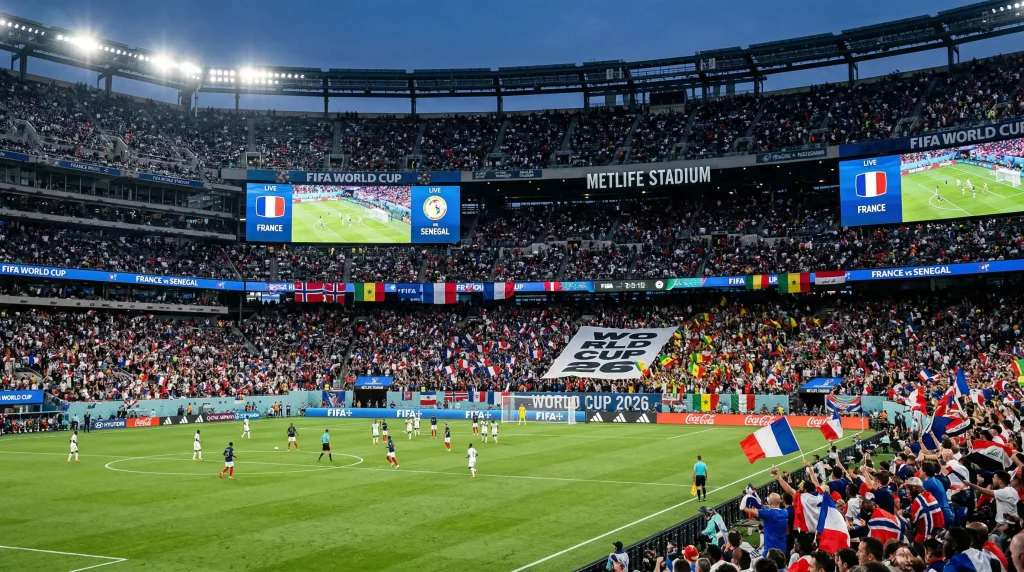
Two consecutive World Cup finals. A squad bursting with generational talents. The kind of tournament pedigree that makes other nations envious. France enter Group I as the team everyone expects to cruise through, and therein lies exactly the problem. Expectation has undone French teams before — the 2010 implosion, the 2002 opening defeat to Senegal — and the group draw presents a fascinating parallel to past disasters.
Senegal return to face France twenty-four years after their stunning 2002 World Cup opener. Norway bring Erling Haaland and the question of whether one transcendent striker can elevate an entire nation. Iraq make their first World Cup appearance since 1986, returning to the global stage after decades of turmoil that makes their qualification an achievement regardless of results. Group I offers star power, historical resonance, and genuine competitive intrigue beneath the French favouritism.
France Carry the Weight of Back-to-Back Finals
The 2018 triumph in Moscow established this French generation as champions. The 2022 final loss to Argentina on penalties demonstrated that even the best teams cannot guarantee outcomes. Reaching consecutive finals represents remarkable consistency — only seven nations in World Cup history have achieved it. Yet France’s current challenge involves converting consistency into a second trophy within three tournaments, a feat that would place them alongside Brazil and Italy among football’s greatest dynasties.
Kylian Mbappé has evolved from precocious talent to established superstar since Russia 2018. His Real Madrid move following years of speculation places him among the sport’s absolute elite, though club distractions could theoretically affect international focus. The speed, finishing, and big-game temperament remain exceptional; France’s attacking approach centres on creating spaces for Mbappé to exploit regardless of tactical setup.
The supporting cast around Mbappé provides depth that other nations cannot match. Antoine Griezmann has refined his role into a hybrid creator-finisher who amplifies Mbappé’s effectiveness. Ousmane Dembélé offers unpredictable wing play that destabilises defensive structures. Randal Kolo Muani emerged during the 2022 World Cup as a genuine striking option. Marcus Thuram has developed into an international-calibre forward. The attacking options allow manager Didier Deschamps to adapt formations without sacrificing quality.
Defensive concerns persist despite the attacking riches. The centre-back position lacks the certainty that previous French generations possessed through Thuram, Desailly, and Varane at their peaks. N’Golo Kanté’s decline from his world-beating best creates midfield coverage questions. Aurélien Tchouaméni has assumed greater responsibility alongside Kanté or as his replacement, bringing quality alongside relative inexperience at the highest levels.
Current odds around 4/1 for France to win the World Cup position them as first or second favourites depending on market movement. Group I should provide comfortable passage to the knockout stages, where the genuine challenges begin. The expanded format makes French group stage elimination virtually unthinkable — they would need to lose to Senegal, Norway, and Iraq, a scenario the odds correctly price as near-impossible.
Senegal Seek Revenge for Twenty-Four Years of French Dominance
The 2002 World Cup opening match remains one of football’s greatest upsets. Senegal, appearing at their first World Cup, defeated defending champions France 1-0 in Seoul through Papa Bouba Diop’s bundled finish. The result sent France spiralling toward ignominious group stage elimination while launching Senegal’s extraordinary run to the quarter-finals. The nations have not met at a World Cup since, making their Group I fixture a genuine occasion.
Contemporary Senegalese football has established itself firmly among Africa’s elite. The 2022 Africa Cup of Nations victory came through penalty shootout defeat of Egypt, a triumph that validated years of gradual progress. Sadio Mané’s departure from elite European football has diminished their attacking ceiling, but the collective quality across the squad compensates for reduced individual star power.
Aliou Cissé has managed Senegal since 2015, providing continuity that most African nations lack. His tactical approach balances defensive organisation with counter-attacking threat, similar to what Morocco achieved so effectively in 2022. Édouard Mendy provides world-class goalkeeping; Kalidou Koulibaly anchors the defence despite advancing age; Idrissa Gueye offers experienced midfield security. The squad lacks Mbappé-level individual brilliance but compensates through collective understanding.
The France fixture represents Senegal’s marquee moment in Group I. Even partial success — a draw or competitive loss — establishes credibility that carries into matches against Norway and Iraq. Victory would create psychological momentum while potentially destabilising French confidence. The historical parallel to 2002 adds emotional weight that transcends typical group stage matches.
Current odds around 5/2 for Senegal to qualify from Group I appear reasonable given their quality and the expanded format’s provisions. Senegal to beat France trades at approximately 7/1, offering genuine long-shot value for those who believe the historical parallel carries weight beyond sentimentality. Their more realistic path involves defeating Iraq and splitting points with Norway while hoping for minimal French damage.
Norway Pose the Haaland Question That Tournament Football Cannot Answer
No single player dominates his nation’s chances more completely than Erling Haaland dominates Norway’s. The Manchester City striker has rewritten goalscoring records across every competition he enters, yet international football’s condensed format creates different challenges than league campaigns. Norway’s World Cup hopes rest almost entirely on whether Haaland can translate club form into tournament results.
The supporting cast around Haaland remains Norway’s fundamental weakness. Martin Ødegaard provides creative midfield quality from his Arsenal performances, creating the link between defence and Haaland that every effective attack requires. Beyond those two, the squad features solid professionals without the exceptional individual quality that tournament success typically demands. The centre-backs, full-backs, and deeper midfielders lack the pedigree of their group stage opponents.
Norway have not appeared at a World Cup since 1998, when they produced a memorable 2-1 victory over Brazil in the group stages. The subsequent twenty-eight years brought repeated qualification failures that created genuine frustration among a football-mad population. This tournament represents validation for Norwegian football after decades of near-misses and disappointments.
Manager Ståle Solbakken has built a team around maximising Haaland’s effectiveness. The tactical setup funnels opportunities toward the striker while providing defensive structure that compensates for individual limitations elsewhere. Against France, this approach risks becoming damage limitation; against Senegal and Iraq, it could produce the goals that qualification requires.
Betting on Norway involves accepting extreme variance. Haaland scoring freely produces victories; Haaland struggling produces concerning results. Current odds around 2/1 for Norway to qualify from Group I reflect this uncertainty appropriately. Norway to beat France at approximately 11/1 represents genuine value only if you believe Haaland can overcome the quality differential single-handedly — possible but improbable.
Iraq Return to the World Cup After Four Decades of Absence
The last time Iraq appeared at a World Cup, Saddam Hussein’s regime still controlled the nation. That 1986 tournament in Mexico saw Iraq lose all three group matches against Paraguay, Belgium, and host nation Mexico. The subsequent decades brought war, occupation, reconstruction, and the kind of societal turmoil that makes football development nearly impossible. Iraq’s qualification for 2026 represents triumph over circumstances that would have destroyed most football programmes entirely.
The current squad features primarily domestic-based players alongside professionals from Gulf leagues. Mohanad Ali emerged as a teenage prodigy and now leads the attack at 23 years old, his development stunted by the lack of elite European experience that top strikers require. Justin Meram provides MLS-quality attacking options from his lengthy American career. The depth relies heavily on players whose club experiences fall well below World Cup standards.
Iraqi football has rebuilt through regional success. The Gulf Cup victories and Asian Cup performances demonstrated competitive improvement that eventually translated into World Cup qualification. The path through AFC playoffs included dramatic moments that created national celebration, proof that football can provide unity in fragmented societies.
Group I presents Iraq with opponents who collectively possess more individual quality than Iraq’s entire tournament history. France, Senegal, and Norway each feature multiple players from Europe’s top leagues; Iraq features perhaps two or three. The talent gap suggests difficult results, though the World Cup has occasionally produced miraculous upsets that defy logical expectation.
Betting markets correctly identify Iraq as massive underdogs throughout Group I. Their to-win prices against France (approximately 40/1), Senegal (approximately 12/1), and Norway (approximately 7/1) reflect appropriate assessments. Iraq to score in any match offers marginal interest at approximately 1/2, acknowledging that even heavily outclassed teams typically create at least one genuine opportunity. Qualification at approximately 25/1 represents lottery territory appropriate only for symbolic stakes.
Group I Fixtures Offer Star Power Distributed Across Matchdays
FIFA’s scheduling will prioritise France’s fixtures for maximum broadcast appeal. The defending finalists guarantee audience numbers that influence venue and timing decisions. Irish viewers should expect France matches at primetime US slots, creating late-night viewing in Irish Summer Time.
France versus Senegal opens Group I with the fixture that carries historical resonance. The 2002 parallel will dominate pre-match coverage, creating pressure on France that they might prefer to avoid. Expect this match in a major US venue with evening local kickoff — approximately 1:00 AM IST for dedicated Irish viewers.
Norway versus Iraq represents the opening day’s other fixture. The contrast between Haaland’s global profile and Iraq’s underdog story creates compelling narrative regardless of competitive intrigue. This match will receive significant attention as Iraq’s return to the World Cup stage after four decades.
Matchday 2 brings France versus Norway — the fixture where Mbappé meets Haaland in a clash of generational strikers. Marketing considerations ensure this match receives premium scheduling, even though the competitive balance likely favours France significantly. Senegal versus Iraq provides the day’s other action, with African favourites expected to establish their credentials.
The final matchday’s simultaneous kickoffs create the tournament standard designed to prevent match-fixing. France versus Iraq and Senegal versus Norway begin at the same moment, likely by this stage with qualification implications largely settled. The genuine intrigue involves second place and third-place positioning rather than top spot.
Qualification Scenarios Heavily Favour France With Real Competition Below
France should win Group I. The statement requires little qualification beyond acknowledging that football occasionally produces inexplicable results. Their squad quality exceeds any opponent’s by margins that tactical setups cannot entirely overcome. Nine points from three victories represents the baseline expectation; six points with one draw remains acceptable. Anything less than comfortable qualification would constitute genuine shock.
The battle for second place provides Group I’s genuine intrigue. Senegal’s African pedigree suggests baseline competitiveness; Norway’s Haaland factor creates upset potential; Iraq’s participation feels more ceremonial than competitive. My assessment positions Senegal as slight favourites for second place, with Norway’s variance making them unpredictable contenders.
Senegal’s path involves defeating Iraq, taking something from Norway, and limiting French damage. Four points should secure second place; three points could suffice depending on goal difference and results elsewhere. Their organisational discipline and tournament experience provide advantages that Norway lack despite Haaland’s individual quality.
Norway’s qualification depends heavily on Haaland’s performances. A hat-trick against Iraq followed by a goal against Senegal would likely produce sufficient points. Failure to score consistently would expose the limitations surrounding Haaland, creating vulnerability that Senegal could exploit. The variance in Norwegian outcomes makes confident prediction difficult.
Iraq’s qualification would require results so improbable that serious analysis dismisses them. They would need to defeat at least one of France, Senegal, or Norway while hoping for bizarre results elsewhere. The expanded format provides theoretical possibility, but practical probability approaches zero. Enjoy Iraq’s presence for its symbolic significance rather than competitive expectations.
Mbappé Versus Haaland Provides Group I’s Marketing Centrepiece
The France versus Norway fixture brings together two of football’s most devastating attackers in a match that transcends typical group stage significance. Mbappé and Haaland represent different expressions of modern striking excellence — pace and technical brilliance versus power and clinical finishing. Their direct comparison creates narrative hooks that FIFA’s marketing will exploit thoroughly.
The match itself should favour France despite Haaland’s presence. Mbappé operates within a squad that amplifies his effectiveness; Haaland often carries Norway despite limited support. The quality differential across all positions suggests France will control proceedings, though Haaland’s finishing ability means Norway always possess counter-attacking threat.
Betting on the individual performances offers interesting angles. Mbappé to score in France versus Norway trades at prohibitive odds around 4/6, reflecting expectation rather than offering value. Haaland to score at approximately 6/5 provides marginal value given his clinical nature and the likelihood of at least one Norwegian counter-attacking opportunity. Both to score at approximately 2/1 represents the most interesting proposition in the individual markets.
The match’s marketing significance could theoretically affect tactical approaches. France might play more conservatively than necessary, conscious of the reputational damage a Haaland-inspired defeat would cause. Norway might overcommit attacking resources, creating spaces for French counter-attacks. The psychological dynamics add unpredictability that pure quality assessments might miss.
For neutral viewers, this fixture represents must-watch television regardless of betting interest. The individual brilliance on display, combined with competitive stakes that matter for both nations, creates the kind of football spectacle that justifies tournament formats. Irish viewers facing late-night viewing should prioritise this match above other Group I fixtures.
Group I Betting Markets Offer Limited but Identifiable Value
The group’s predictability narrows value opportunities compared to more competitive groups. French dominance compresses odds to levels where backing them offers insufficient return. The genuine value lies in specific positions involving the three non-French teams.
France to win Group I trades at approximately 1/4, offering no meaningful return for significant risk. Avoid this market entirely; the price fails to compensate for the possibility of Senegal ambush or Norwegian surprise. Better opportunities exist in match-specific markets where uncertainty creates pricing inefficiencies.
Senegal to qualify at 5/2 represents reasonable value given their tournament pedigree and manageable fixtures against Norway and Iraq. The African champions bring experience that should translate into results against opponents who lack equivalent backgrounds. The price appropriately reflects difficulty without dismissing their genuine quality.
Norway to qualify at 2/1 offers value for those who believe Haaland can deliver in tournament conditions. The price implies approximately 33% probability — arguably low for a team featuring one of world football’s most devastating finishers alongside Arsenal’s creative hub. The variance cuts both ways, but the upside seems underpriced.
France versus Senegal under 2.5 goals at approximately 11/10 represents systematic value. Senegal’s defensive organisation against elite opponents demonstrated in 2022 World Cup performances suggests a tight encounter. France might struggle to break down structured African defences, creating conditions where goalscoring opportunities prove limited. The historical parallel to 2002’s 1-0 adds psychological weight.
Total goals in Norway matches should trend toward overs. Haaland’s presence guarantees Norwegian goalscoring intent; their defensive limitations invite opposition scoring. Norway versus Senegal over 2.5 goals at approximately 21/20 offers marginal value, though goal distribution remains uncertain. Norway versus Iraq over 3.5 goals represents another angle worth considering given likely Iraqi defensive exposure.
Irish Viewers Should Prioritise Specific Group I Fixtures
Group I contains football’s biggest individual stars alongside compelling underdog narratives. The late-night timing for Irish viewers requires selectivity — not every fixture warrants sleep sacrifice. Strategic viewing maximises entertainment value while preserving energy for subsequent tournament days.
France versus Senegal deserves priority status for the historical significance alone. The 2002 parallel creates narrative hooks that enhance viewing regardless of result. The quality on display should produce entertaining football; the competitive stakes add genuine tension. This fixture justifies late-night commitment.
France versus Norway provides the star-power occasion that casual viewers appreciate. Mbappé against Haaland generates excitement that transcends typical group stage stakes. The fixture’s marketing prominence ensures extensive coverage that creates social conversation. Watching this match enables participation in the tournament’s broader narrative.
Senegal versus Norway merits attention as the likely decider for second place. The competitive balance between these teams creates genuine uncertainty that predictable matches lack. Both teams possess the quality to win while maintaining vulnerabilities opponents can exploit. The fixture’s significance for qualification adds stakes that enhance engagement.
Iraq’s matches carry emotional resonance beyond competitive considerations. Their return to the World Cup after forty years represents triumph over circumstances that football cannot fully comprehend. Watching Iraq versus France or Senegal provides perspective on the sport’s global meaning, even when results unfold as expected. The symbolic significance transcends scorelines.
Avoid prioritising the final matchday fixtures unless qualification scenarios remain genuinely uncertain. By that stage, France will almost certainly have secured group victory. The matches become formalities unless earlier upsets have created unexpected tension. Allocate viewing energy toward fixtures where outcomes remain contested.
