
 Available in US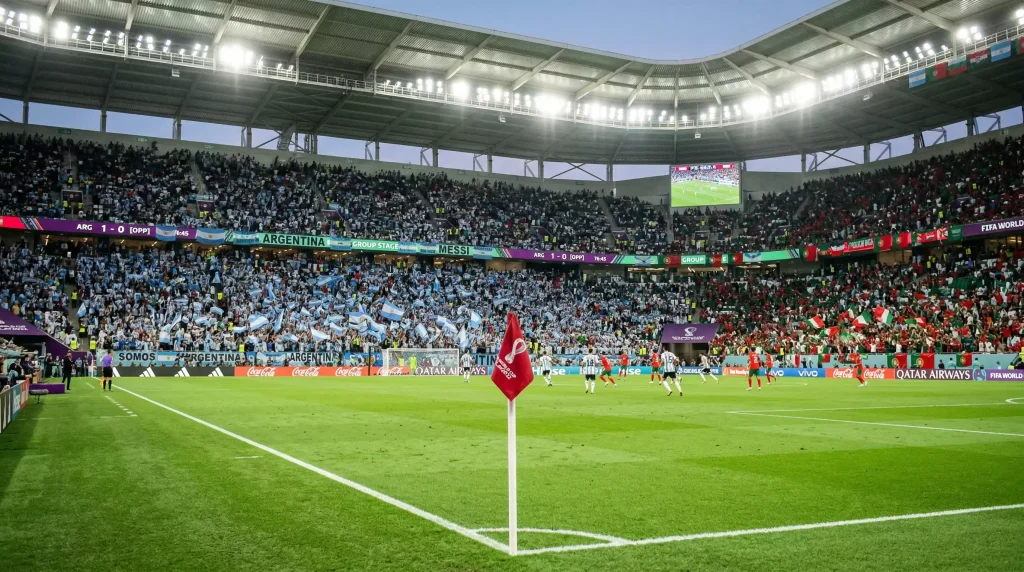
Qatar 2022’s final remains vivid — Mbappé’s hat-trick, Messi’s crowning moment, penalties that aged everyone watching by years. Argentina emerged as world champions, completing Lionel Messi’s career in a manner that felt almost scripted. Now comes the sequel nobody writes about: defending the trophy. No team has successfully retained the World Cup since Brazil in 1962. Argentina enter Group J carrying that historical weight alongside the tactical challenges of a squad in transition.
Group J pairs the champions with opponents of varying pedigree. Algeria bring North African flair and recent AFCON success that makes them dangerous outsiders. Austria continue their quiet rise through European football’s middle ranks. Jordan make their World Cup debut, representing Arab football’s expansion beyond traditional powers. The group presents Argentina with manageable opposition while asking fundamental questions about their post-Qatar evolution.
Argentina’s Title Defence Begins Under Unprecedented Pressure
The mathematics of World Cup retention reveal uncomfortable patterns. Brazil 1962 remains the solitary successful defence in tournament history. Italy in 1938 retained the trophy under circumstances — hosting, political climate, reduced competition — that cannot be replicated. Every subsequent champion has failed to repeat: Brazil 1970, Germany 1974, Argentina 1978, Italy 1982, Argentina 1986, Germany 1990, Brazil 1994, France 1998, Brazil 2002, Italy 2006, Spain 2010, Germany 2014, France 2018. The pattern suggests structural factors that individual brilliance cannot overcome.
The Qatar squad has inevitably aged. Nicolás Otamendi and Ángel Di María approach or exceed forty. The centre-back pairing requires refreshment, with Cristian Romero and Lisandro Martínez emerging as likely successors. Rodrigo De Paul’s energy has diminished; Alexis Mac Allister has assumed greater creative responsibility. The transition from battle-hardened champions to effective defenders of the crown remains incomplete.
Messi’s status creates the tournament’s dominant narrative. At 38, he continues defying biological expectation at Inter Miami, though MLS opponents provide different challenges than World Cup competition. The emotional completion in Qatar raises questions about motivation that cannot be answered until tournament matches begin. Does Messi burn to win a second World Cup, or has satisfaction dulled the competitive edge that fuelled his career?
Manager Lionel Scaloni achieved what predecessors could not, building an Argentina team that combined individual quality with collective spirit. His tactical approach balances Messi’s creative freedom with defensive organisation that previous Argentina squads lacked. The question involves whether that balance survives the natural evolution of ageing and squad turnover that two years inevitably bring.
Current odds around 11/2 for Argentina to win the World Cup position them among the three or four favourites. Group J should provide comfortable qualification, though the path beyond becomes progressively more challenging. The Round of 32 offers manageable opposition; subsequent rounds present the European and South American elite that Argentina must overcome to repeat.
Algeria Arrive with North African Ambitions and Recent Pedigree
The 2019 Africa Cup of Nations triumph established Algeria among the continent’s elite. Riyad Mahrez captained that victory, his Manchester City quality elevating teammates through individual brilliance. The subsequent years have seen Algeria maintain competitiveness without quite replicating that championship form, creating uncertainty about their current level entering a World Cup that arrives at different career stages for key players.
Mahrez remains Algeria’s most recognisable figure despite departing elite European football for Saudi Arabian riches. His technical quality and big-game experience provide advantages that many African nations lack. Whether the reduced competitive intensity of Saudi league football affects World Cup readiness remains uncertain — the financial move prioritised income over development in ways that could show under tournament pressure.
Beyond Mahrez, the squad features several players from competitive European leagues. Islam Slimani provides experienced striking presence despite advancing age. Youcef Atal’s full-back dynamism creates attacking width when fit and focused. Saïd Benrahma offers Premier League-quality creativity from his West Ham and subsequent experiences. The collective quality positions Algeria as genuine dark horse contenders.
Drawing Argentina immediately tests Algerian ambitions. The 1982 World Cup saw Algeria defeat West Germany in one of tournament history’s great upsets, proving that this fixture combination has produced shocks before. That historical precedent offers psychological ammunition without guaranteeing contemporary repetition. Argentina’s current quality exceeds 1982’s West Germany in most assessments.
Current odds around 11/5 for Algeria to qualify from Group J appear reasonable given their quality and manageable fixtures against Austria and Jordan. Algeria to beat Argentina at approximately 9/1 represents genuine long-shot value for those who believe North African organisation can frustrate South American flair. More conservative approaches target the Austria and Jordan fixtures where Algerian superiority should produce results.
Austria Continue a Quiet European Rise That Deserves Recognition
Austrian football has steadily improved from irrelevance toward genuine European respectability. The Euro 2020 tournament saw Austria reach knockout stages for the first time, a modest achievement for larger nations but genuine progress for a country that historically underperformed. The current squad builds on that foundation with Bundesliga regulars and emerging talents who deserve wider recognition.
David Alaba’s career-ending injury removed Austria’s most accomplished player before the tournament. The Real Madrid defender provided world-class quality that elevated the entire national team; his absence creates a void that no available replacement can fill. Austrian hopes adjust accordingly, shifting from ambitious underdog to more modest qualification expectations.
Remaining Austrian quality centres on attacking options. Marcel Sabitzer brings Borussia Dortmund experience alongside genuine goal threat from midfield. Christoph Baumgartner provides creative presence developed through RB Leipzig’s demanding system. Marko Arnautović, though ageing, offers physical presence and proven international scoring record. The attack should create opportunities against Group J opponents.
Manager Ralf Rangnick’s appointment brought tactical intensity that transformed Austrian performance levels. His pressing systems extract maximum effort from available players, creating competitive advantages that individual quality alone cannot provide. Against superior opponents like Argentina, organisation compensates for talent deficits; against comparable teams like Algeria and Jordan, tactical superiority becomes decisive.
Current odds around 15/8 for Austria to qualify from Group J reflect appropriate assessment of their chances. The Alaba injury diminishes expectations, but the remaining squad possesses qualification-level quality. Austria to finish second in Group J at approximately 9/4 offers reasonable value given Rangnick’s organisational advantages and the comparative weakness of Algeria and Jordan.
Jordan Make History By Simply Appearing
Jordan’s first World Cup qualification represents remarkable achievement for a nation without historical football prominence. The path through AFC playoffs included victories over Australia on aggregate and a playoff final triumph that created national celebration. Simply reaching the tournament validates years of investment in football infrastructure that larger neighbours dismissed as quixotic.
The squad features primarily domestic-based players supplemented by Gulf league professionals. Yazan Al-Naimat leads the attack with the kind of physical presence that gives defenders problems regardless of quality differential. Mousa Al-Tamari provides creative midfield quality developed through Belgian league experience. The collective level falls well below World Cup standards while maintaining enough competence to avoid embarrassment.
Manager Hussein Ammouta has built a team that maximises limited resources. The tactical approach emphasises defensive organisation and counter-attacking directness — the only viable strategy against superior opponents. Jordan will not control matches against Argentina, Algeria, or Austria; they will attempt to survive prolonged pressure while hoping for breakaway opportunities.
Drawing Argentina immediately presents Jordan with football’s ultimate challenge. Facing the world champions in their opening World Cup match tests composure that smaller nations often lack. The result matters less than the performance — Jordan competing respectably against Messi’s Argentina would represent success beyond scoreline implications.
Betting markets correctly price Jordan as Group J’s certain bottom finisher. Odds around 33/1 for qualification reflect the near-impossibility of their task against three superior opponents. Jordan to score in any match trades at approximately 4/5, acknowledging that even outclassed teams typically create at least one genuine chance. Avoid extended Jordan bets; their participation serves symbolic purposes rather than competitive expectations.
Group J Fixtures Test Argentina’s Champions Mentality Immediately
FIFA’s scheduling will prioritise Argentina matches for maximum Latin American audience. The defending champions guarantee broadcast interest that influences venue and timing decisions. Irish viewers should expect Argentina fixtures at US primetime slots, creating late-night viewing requirements in Irish Summer Time.
Argentina versus Algeria opens Group J with immediate intrigue. The North African challenge poses tactical questions that comfortable opponents cannot — Algeria’s organisation and counter-attacking threat could frustrate Argentine ambitions. Expect this match in a major venue with evening local kickoff, approximately 1:00 AM IST for Irish viewers determined to watch the champions begin their defence.
Jordan versus Austria provides the opening day’s other fixture. This match likely determines third place positioning, with Austria expected to establish superiority that Jordan cannot overcome. The competitive balance favours Austria significantly, though World Cup debuts occasionally produce performances that exceed expectations.
Matchday 2 brings Argentina versus Jordan — the fixture where champions meet debutants in a mismatch that testing provides. Argentine rotation possibilities emerge if they have already defeated Algeria, creating opportunities for fringe players to demonstrate readiness. Algeria versus Austria on the same day decides second place contention with genuine competitive intrigue.
The final matchday’s simultaneous kickoffs see Argentina versus Austria and Algeria versus Jordan. By this stage, Argentina should have secured qualification and likely group victory. The genuine interest involves whether Algeria or Austria claim second place, with the Algeria versus Jordan result potentially decisive if Algeria have dropped points earlier.
Qualification Scenarios Present Argentina as Overwhelming Favourites
Argentina should win Group J with minimal difficulty. The statement carries more confidence than similar predictions elsewhere because the quality differential genuinely justifies it. Defending champions with Messi, Álvarez, Mac Allister, and Romero exceed anything Algeria, Austria, or Jordan can field. Nine points represents the baseline expectation; six points with draws would constitute underperformance.
Second place genuinely remains contested between Algeria and Austria. Both teams possess qualification-level quality without reaching the heights that would challenge Argentina. My assessment positions them as roughly equal, with Algeria’s attacking flair balanced against Austrian tactical discipline. The Algeria versus Austria fixture likely determines which advances alongside the champions.
Algeria’s path involves defeating Jordan, taking something from Austria, and limiting Argentine damage. Four points should secure second place given Jordan’s expected struggles. Their attacking options against Austrian defensive organisation creates the group’s most uncertain fixture. A draw might suffice if both teams defeat Jordan by similar margins.
Austria’s qualification runs through Rangnick’s tactical system. Defeating Jordan while drawing with Algeria would produce identical points, with goal difference likely deciding advancement. Austrian organisation should extract maximum points from the Jordan fixture while their pressing intensity could trouble Algeria’s technical players. The absence of Alaba diminishes expectations without eliminating qualification prospects.
Jordan’s advancement would require results so improbable that analysis dismisses them. They would need victories against Algeria and Austria while hoping for points against Argentina — an impossible sequence given quality differentials. The expanded format provides theoretical third-place pathway, but practical probability approaches zero.
Messi’s Final World Cup Chapter Provides Narrative Framework
Whether Messi plays World Cup 2030 depends on biological factors that 38-year-old athletes cannot control. This tournament might represent his final opportunity at international football’s highest level, adding narrative weight that transcends tactical considerations. Every Argentina match carries the possibility of farewell moments that define careers.
The question of motivation remains central to Argentine prospects. Qatar 2022 provided the trophy that justified everything — the comparisons to Maradona, the national expectations, the personal drive that sustained excellence through disappointments. Does Messi approach this World Cup with equal intensity, or has completion bred satisfaction that diminishes competitive edge?
Evidence from Inter Miami suggests the fire still burns. Messi’s MLS performances demonstrate continued excellence against inferior opposition, though World Cup quality represents different challenges. His preparation and physical condition entering the tournament will influence Argentina’s chances more than any other factor.
For neutral viewers, Messi’s presence guarantees must-watch status for every Argentina fixture. Watching the greatest player of his generation potentially conclude his international career adds emotional stakes that exceed competitive implications. Group J provides the stage; Messi’s performances determine whether the final chapter satisfies or disappoints.
Betting angles around Messi’s individual performance offer intriguing possibilities. Messi to win the Golden Ball trades at approximately 8/1, reflecting expectations that tournament success requires his brilliance. Messi to score in specific fixtures provides match-by-match opportunities. The emotional narrative enhances rather than replaces analytical approaches to Argentina betting.
Group J Betting Markets Offer Concentrated Value Opportunities
The group’s structure creates specific markets where value exists despite Argentina’s dominance. The champion’s presence narrows competitive options while creating secondary markets with genuine pricing inefficiencies.
Argentina to win Group J at 1/6 offers no meaningful return for significant risk. Avoid this market entirely; the potential return fails to justify even small possibilities of upset. Better opportunities exist in match-specific markets where individual fixtures create uncertainty.
Algeria to qualify at 11/5 represents reasonable value given their quality and the Austria fixture’s competitive balance. The 2019 AFCON champions bring tournament experience that Austria lack; their attacking options should produce sufficient goals against Jordan. The price appropriately reflects difficulty without dismissing genuine quality.
Austria to qualify at 15/8 offers value for those who believe Rangnick’s system can overcome talent deficits. The tactical organisation should extract maximum points from the Jordan fixture while creating difficulties for Algeria’s technical players. The Alaba absence hurts but does not eliminate qualification prospects.
Argentina versus Algeria under 2.5 goals at approximately 6/5 represents systematic value. Algerian defensive organisation against elite opponents has demonstrated effectiveness; Argentina might struggle to break down structured North African defences quickly. A tight, tactical encounter appears underpriced by markets expecting Argentine dominance.
Algeria versus Austria draw at approximately 9/4 offers value in a match between roughly comparable opponents. Both teams will prioritise avoiding defeat; both possess the defensive organisation to frustrate attacking intent. The fixture’s significance for second place adds caution that naturally produces tight scorelines.
Irish Viewers Should Approach Group J with Strategic Selection
Group J contains the defending champions alongside compelling underdog narratives. The late-night timing for Irish viewers requires selectivity — Argentina matches warrant priority, while supporting fixtures demand case-by-case evaluation.
Argentina versus Algeria deserves priority viewing status. The North African challenge tests champions in ways that comfortable opponents cannot. The 1982 precedent adds historical intrigue, while Algeria’s AFCON pedigree suggests genuine competitive potential. This fixture combines quality with uncertainty that justifies sleep sacrifice.
Argentina versus Austria offers different appeal — established champions against organised European opponents. Rangnick’s tactical approach creates friction that pure quality mismatches lack. The fixture might prove tighter than markets expect, creating entertainment value beyond one-sided proceedings.
Algeria versus Austria represents Group J’s genuinely uncertain fixture. Both teams possess comparable quality; both require victory to secure second place. The competitive balance creates drama that predictable Argentina victories cannot provide. Prioritise this match for genuine sporting tension.
Jordan’s matches carry emotional resonance that exceeds competitive significance. Their World Cup debut represents achievement that football supporters instinctively appreciate. Watching Jordan compete against Argentina or Algeria provides perspective on the sport’s global meaning, though results will likely unfold predictably. The symbolic significance warrants attention without demanding priority scheduling.
The final matchday fixtures require evaluation based on earlier results. If second place remains contested, the Algeria versus Jordan outcome might prove decisive. If Argentina have already secured the group and qualification scenarios have clarified, the fixtures become formalities better followed through highlights than live viewing.
