
 Available in US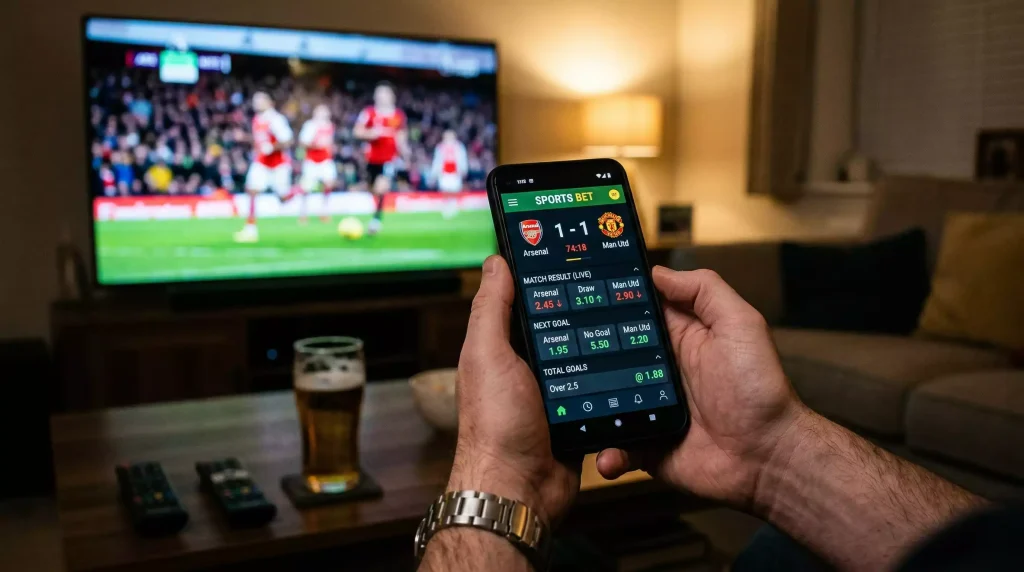
Thirty-seven seconds. That is how long I had to react when Argentina went behind to Saudi Arabia in their 2022 World Cup opener. The pre-match favourite at 1/5 was suddenly available at 4/7 in-play, then 4/5, then evens, the odds cascading upward with each passing minute. Punters who backed Argentina at evens after conceding collected when they eventually… lost 2-1. Saudi Arabia held on for one of the great World Cup upsets. The live betting opportunity that looked obvious turned out to be a trap.
Live betting — also called in-play betting — transforms World Cup viewing into a continuous decision point. Every attack, every save, every tactical substitution shifts the odds on your screen. Bookmakers promise excitement and opportunity. What they deliver is a sophisticated extraction mechanism that harvests money from punters who believe they can outthink algorithms processing data faster than human perception allows. The question is not whether live betting is exciting — the adrenaline is undeniable. The question is whether profitable live betting at World Cup level is genuinely achievable or merely an expensive illusion.
I have tracked my own live betting results across three World Cups, and the conclusions challenged my assumptions. Certain live betting approaches proved consistently profitable. Others generated steady losses despite feeling like intelligent engagement. The difference lay in understanding exactly what advantages — if any — a human punter can maintain against bookmaker pricing algorithms, and which specific scenarios create genuine exploitable edges.
How Live Betting Works at Major Tournaments
The mechanics of live World Cup betting appear simple on the surface. You watch a match, you assess what you are seeing, you place bets at odds that update continuously based on match events. A goal triggers immediate odds adjustment. A red card shifts probability calculations. Even extended possession sequences cause micro-movements in live lines. The bookmaker’s interface presents this as empowering — you are not locked into pre-match assessments but can respond to unfolding reality.
Behind this interface, something rather different occurs. Bookmakers deploy algorithmic pricing models that process multiple data streams simultaneously: ball position, xG accumulation, player fatigue indicators, historical patterns, and aggregate betting market sentiment. These models update odds within milliseconds of significant events. When you see Argentina concede to Saudi Arabia and think “opportunity,” the algorithm has already moved odds to reflect the new probability landscape before your finger reaches the screen.
The latency gap represents the core structural disadvantage for human bettors. A goal scores on the pitch. Broadcast delay means you see it approximately 5-8 seconds later on your television or stream. The algorithm receives the information essentially in real-time through data feeds that do not rely on broadcast transmission. By the time you react to what you are seeing, the price has already adjusted — sometimes by as much as 20-30% of the implied probability shift.
World Cup matches amplify these dynamics. High liquidity events attract sophisticated algorithmic traders who exploit any pricing discrepancy within fractions of a second. The competitive market means bookmaker margins on live betting often compress during major matches, but execution speed advantages remain firmly with non-human participants. You are competing not just against the bookmaker’s pricing model but against a global ecosystem of automated trading systems.
Suspension periods add another layer of complexity. During corner kicks, free kicks near goal, penalty decisions, and goal-scoring situations, bookmakers suspend live markets entirely. The most significant events — precisely the moments when you might identify value based on what you are watching — occur during suspended betting windows. By the time markets reopen, prices fully reflect the resolved situation.
The Case For Live Betting Value
Despite structural disadvantages, profitable live World Cup betting is not impossible. Specific scenarios create genuine edges that patient punters can exploit through discipline and preparation.
Pre-match positions enhanced by live events offer the clearest value pathway. Suppose you back England at 2/1 to beat Croatia before kick-off, assessing England’s value based on squad quality and motivation. Croatia then scores an early goal. Your pre-match position is now losing, but England’s live price might drift to 7/2 or 4/1 as the market overreacts. If your pre-match assessment was correct — that England possess superior quality — the in-play price represents even better value than your original selection. Adding to your position at inflated live odds capitalises on your pre-match analysis rather than requiring real-time reaction speed.
Tactical understanding creates exploitable angles that algorithms struggle to capture. A human analyst watching Scotland defend a 1-0 lead against Brazil can assess body language, formation adjustments, and defensive discipline in ways that pure statistical models do not fully process. If Scotland’s defending looks structured and sustainable, the live price of 2.5/1 to win might undervalue their actual chances of holding out. This requires genuine football knowledge rather than betting instinct — but punters with analytical backgrounds can identify moments where the market prices do not match observable reality.
Cash-out timing represents selective value extraction. If you backed Germany to beat Japan at 1/3 pre-match and Germany lead 1-0 at halftime, the cash-out offer might represent 80% of potential returns. Accepting this locks in guaranteed profit while eliminating second-half variance. The cash-out function effectively lets you trade the position based on evolving match circumstances. Whether this represents “value” depends on your assessment of second-half probability versus the guaranteed return offered.
Specific markets contain more exploitable inefficiency than match winner prices. Next goalscorer markets during World Cup matches often incorporate significant margin that does not fully adjust for in-match tactical changes. A fresh substitute striker entering against tired defenders might offer value at listed prices that assume average goal expectancy. Similarly, corners and cards markets sometimes lag behind obvious tactical shifts that observant punters can exploit.
The Case Against — Speed and Emotion
The structural arguments against profitable live World Cup betting are substantial enough that I consider them the default position until proven otherwise. Understanding these disadvantages prevents expensive lessons learned through experience.
The speed disadvantage is not merely technical — it is absolute. No human can consistently beat algorithmic pricing to significant events. Even the most analytically brilliant punter operates at a fundamental timing disadvantage that cannot be overcome through skill. You are playing a game where your opponent moves faster, processes information faster, and adjusts prices before you physically can react. In competitive markets, this speed gap is fatal to profitability.
Emotional engagement during live football creates systematic decision-making errors. When Ireland nearly qualified for the 2026 World Cup through a penalty shootout, I watched the decisive miss and felt physically sick despite having no financial stake. Now imagine you have €100 riding on the outcome. Your ability to assess value rationally evaporates in moments of high emotional intensity. Live betting during World Cup matches practically guarantees these emotional states, leading to impulsive decisions that feel justified in the moment but consistently destroy bankroll over time.
Cognitive load during live betting exceeds manageable thresholds. While watching a match, you simultaneously monitor multiple betting markets, assess evolving tactical situations, compare available prices across bookmakers, calculate stake sizing, and manage existing positions. This cognitive demand consistently produces errors even among experienced bettors. The more engaged you become with the match as entertainment, the less capacity remains for rational betting decisions.
Bookmaker manipulation of live odds extracts additional margin during high-activity periods. When England score against Croatia and casual punters flood in to back them, bookmakers widen margins on England prices while offering slightly better value on Croatia. The recreational betting flow allows margin expansion that does not exist in pre-match markets. You pay more for the privilege of betting in-play than you would have paid before kick-off.
Loss-chasing dynamics accelerate during live betting sessions. A punter who loses their first live bet has immediate opportunity to recoup through another in-play selection. This creates a dangerous feedback loop where successive losses compound while the emotional urgency to recover intensifies. I have seen disciplined pre-match bettors destroy months of careful bankroll management in single live betting sessions. The access and speed create addiction-adjacent patterns that smart punters must recognise and avoid.
Myth vs Reality — Can You Beat the Algorithm?
The fantasy of beating the algorithm persists because it flatters our self-image as intelligent observers. We watch football matches and believe we see things that computers cannot appreciate. The reality is more humbling.
Algorithmic pricing models now incorporate expected goals data, ball tracking, pressing intensity metrics, and hundreds of other variables that correlate with match outcomes. These models do not just react to goals and red cards — they continuously adjust based on the statistical texture of play. When you watch Scotland defending deep against Brazil and think “they look solid,” the algorithm has already processed that Scotland’s defensive actions per 90 minutes align with sustainable defensive patterns and adjusted prices accordingly.
The areas where human judgment might genuinely exceed algorithmic assessment are narrow. Psychological factors — manager body language, visible player conflicts, apparent exhaustion or inspiration — represent genuine informational edges for attentive human observers. But these edges are small, inconsistent, and easily overwhelmed by the structural speed disadvantage. Even if you correctly assess that England look mentally fragile trailing 1-0, the 47 seconds between your assessment and your bet placement allows the market to move against you.
Professional bettors who profit from live markets do so through methods unavailable to recreational punters. They employ automated trading systems with millisecond execution. They maintain direct data feeds that bypass broadcast delay. They spread risk across hundreds of simultaneous positions rather than concentrating on single matches. Attempting to replicate their success through manual betting on your mobile app is like entering a Formula 1 race with a bicycle.
Irish Time Zone Considerations
The 2026 World Cup creates specific challenges for Irish punters attempting live betting. Understanding these practical factors prevents frustrating and expensive late-night decisions.
Match scheduling across three North American time zones means most fixtures kick off between 5:00pm and 2:00am Irish Summer Time. Group stage matches will feature some afternoon kick-offs around 6:00pm, but premier fixtures — including most matches involving major nations — will start at 8:00pm, 11:00pm, or even 2:00am. Live betting at 2:00am after a day of work involves cognitive impairment that no strategy can overcome.
The tournament duration — 39 days from June 11 to July 19 — creates fatigue effects that compound daily decision-making. Punters who engage heavily with live betting during the group stage often arrive at knockout rounds mentally exhausted and financially depleted. The early tournament period becomes a bankroll trap rather than a value opportunity.
Late-night live betting correlates strongly with poor decision-making across multiple studies. Judgment deteriorates, risk tolerance increases, and loss-chasing behaviour intensifies after midnight. Irish punters following night matches should pre-commit to limits before kick-off rather than trusting in-the-moment discipline.
Practical workarounds exist for those committed to World Cup live betting. Record matches and watch on delay, avoiding score updates, then bet on recorded footage with prices available at the actual live moment. This eliminates the late-night factor while maintaining tactical observation advantages. Alternatively, focus live betting activity on afternoon fixtures scheduled for Irish convenience rather than forcing engagement with 2:00am kick-offs.
Our Verdict — When Live Betting Makes Sense
Live betting profitability at the World Cup is achievable only under narrow conditions that most punters will not meet. My verdict is cautious endorsement for prepared bettors and firm discouragement for recreational participants.
Live betting makes sense when you have established pre-match positions that benefit from price enhancement following contrary events. If you backed USA at 3/1 to beat Paraguay and Paraguay score first, the USA live price might reach 6/1 or 7/1. Adding to your position at these enhanced odds — if your pre-match analysis remains valid — represents sound strategy. This approach requires pre-match preparation and does not depend on real-time reaction speed.
Live betting makes sense when you possess genuine tactical expertise that allows assessment of factors the market underweights. Former players, coaches, and analytical professionals may legitimately see things that algorithms miss. But this advantage is narrower than most punters believe, and overconfidence in personal expertise is itself a common betting error.
Live betting makes sense for small-stakes entertainment during matches you are watching anyway. A €5 bet on the next goalscorer adds engagement value that exceeds its expected loss. Treating live betting as entertainment expenditure rather than profit opportunity prevents the bankroll damage that ambitious live betting typically causes.
Live betting does not make sense as a primary World Cup betting strategy. The structural disadvantages are too severe, the emotional traps too consistent, and the late-night scheduling too demanding for sustainable profitability. Irish punters should concentrate analysis on pre-match markets where information asymmetry favours preparation over reaction speed, and treat live betting as an occasional enhancement rather than a core activity.
The honest answer to whether live betting is profitable at the World Cup: for algorithms and professional trading operations, yes. For individual punters placing manual bets through mobile apps, almost certainly not. Accepting this reality is the first step toward a genuinely profitable tournament betting approach.
