
 Available in US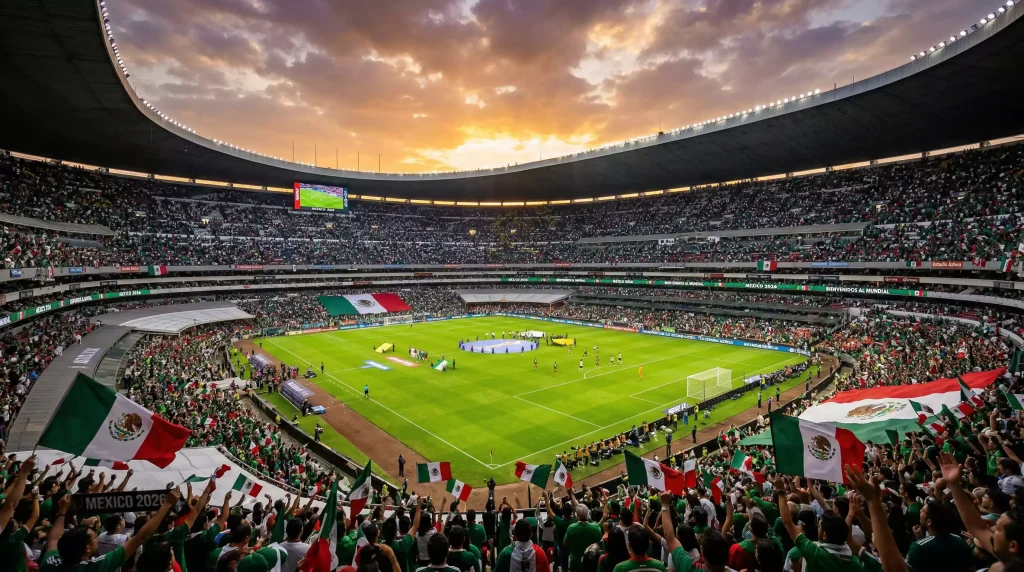
The tournament begins where football history echoes loudest. Estadio Azteca in Mexico City has witnessed more World Cup drama than any venue on earth — Maradona’s Hand of God, the 1970 final, countless moments etched into the sport’s collective memory. On June 11, 2026, the same pitch hosts Mexico versus South Africa in the opening match of the expanded 48-team World Cup. For Irish punters, Group A carries particular resonance: Czechia qualified by eliminating Ireland in that devastating penalty shootout just weeks ago.
Group A presents four teams with distinctly different narratives converging in Mexico and the United States. The hosts carry immense domestic pressure alongside genuine squad quality. South Korea bring Asian efficiency and recent tournament pedigree. South Africa return to the World Cup stage they memorably hosted in 2010. Czechia arrive as the team that broke Irish hearts, making them simultaneously fascinating and frustrating to analyse objectively. The competitive balance creates betting intrigue that more lopsided groups cannot match.
Mexico Open the Tournament with a Nation’s Expectations on Their Shoulders
Hosting duties amplify pressure in ways that confound predictions. The 1986 World Cup saw Mexico reach quarter-finals on home soil, while the 1970 edition produced memorable performances without trophy contention. Neither precedent fully applies to the current squad, which enters the tournament without the transcendent talents that previous Mexican generations possessed but with more tactical sophistication than any predecessor.
The opening match against South Africa at the Azteca represents Mexican football’s most significant fixture in decades. An estimated 87,000 supporters will create an atmosphere that overwhelms visitors while potentially suffocating Mexican players unaccustomed to such concentrated expectation. The thin Mexico City air adds physical challenge — visiting teams from sea level struggle with altitude while Mexico train at height regularly.
Manager Javier Aguirre returned for his third stint leading El Tri following the disappointing Gold Cup campaign under his predecessor. Aguirre’s pragmatic approach emphasises defensive organisation and counter-attacking speed — a departure from the possession-oriented football that Mexican supporters often prefer but a methodology that tournament football frequently rewards. His experience managing across Europe and Mexico provides tactical flexibility that adapts to opponent strengths.
The squad features several players competing at elite European clubs. Edson Álvarez anchors the midfield with the kind of physical presence that international football demands. Hirving Lozano, despite recent injury struggles, remains Mexico’s most dangerous attacking threat when fit and motivated. Santiago Giménez has emerged as a genuine striking option following prolific seasons at Feyenoord. The depth represents Mexico’s strongest squad since the 2014 vintage that reached the Round of 16 before a controversial loss to Netherlands.
Current odds around 40/1 for Mexico to win the World Cup reflect appropriate long-shot territory. More relevant markets involve group performance and Round of 32 prospects. Mexico to win Group A trades at approximately 5/6 — short enough that value exists only for those with high confidence. Qualification at 1/5 represents near-certainty pricing that offers no practical betting value.
South Korea Arrive with Quiet Confidence Born from Recent Success
The 2002 World Cup co-hosts transformed Asian football through their extraordinary semi-final run. That tournament’s success came partly through controversial officiating and home advantage, but subsequent performances have established South Korea as Asia’s most consistent performers at major tournaments. The current generation lacks the star power of Park Ji-sung and Ahn Jung-hwan but compensates with collective organisation and tactical discipline.
Son Heung-min remains the focal point despite entering his mid-thirties. The Tottenham forward’s goalscoring record and work rate make him one of world football’s most complete attacking players. His experience spanning multiple World Cups and Champions League campaigns provides leadership that younger teammates require. Son’s fitness and form entering the tournament will significantly influence South Korean prospects.
Beyond Son, the squad features several players from competitive European leagues. Hwang Hee-chan has established himself in the Premier League at Wolves, providing pace and directness from wide positions. Kim Min-jae anchors the defence with performances at Bayern Munich and Napoli that rank him among world football’s elite centre-backs. Lee Kang-in offers creative midfield quality developed through Paris Saint-Germain’s academy.
Manager Hong Myung-bo returned for a second spell following the mixed 2014 experience. His tactical approach emphasises the counter-attacking speed that Korean football traditionally executes well while introducing more possession-based phases than previous iterations. The balance between pragmatism and ambition will determine how effectively South Korea compete against superior opponents.
Drawing Mexico in the opening fixture presents South Korea with their most difficult challenge. The altitude in Mexico City, combined with hostile crowd atmosphere, creates conditions that favour the hosts regardless of tactical preparations. South Africa and Czechia represent more manageable opponents where South Korean quality should translate into results. Current odds around 9/4 for South Korea to qualify from Group A appear reasonable given their historical tournament consistency.
South Africa Return to World Cup Football After Fourteen-Year Absence
Bafana Bafana have not appeared at a World Cup since hosting the 2010 tournament that ended in group stage elimination despite the advantage of home soil. The subsequent fourteen years included failed qualification campaigns, organisational dysfunction, and the kind of administrative chaos that undermines football development across African nations. Their return to the world stage represents both celebration and cautious optimism.
The current squad possesses more domestic league quality than international pedigree. Percy Tau remains the most recognisable name following his Champions League experience at Club Brugge and Al Ahly. Themba Zwane provides creative midfield presence despite advancing age. Hugo Broos, the Belgian manager who rebuilt Cameroon before taking the South Africa job, has implemented tactical organisation that maximises limited individual quality.
South Africa’s qualification came through African routes that featured victories over Morocco’s B team and navigating a group without continental heavyweights. The path to America lacked the prestigious scalps that would provide confidence entering Group A. Against Mexico, South Korea, and Czechia, South Africa face opponents with superior individual talent and recent tournament experience.
The opening match against Mexico at the Azteca represents a significant occasion regardless of result. South Africa hosted the 2010 World Cup opening match against the same opponents — a 1-1 draw that produced one of that tournament’s memorable moments. Repeating that result in Mexico City’s altitude against a motivated host nation would represent a major achievement.
Betting markets correctly identify South Africa as Group A’s likely bottom finisher. Odds around 7/1 for qualification reflect the difficulty of their task against three opponents who each possess significant advantages. South Africa to beat Czechia offers the most interesting single-match proposition — two teams of roughly comparable quality despite different strengths. Avoid backing South Africa for extended tournament runs; their ceiling appears limited to potentially respectable group stage performances.
Czechia Arrive Carrying Irish Heartbreak in Their Luggage
For Irish supporters, Czechia’s presence in Group A serves as painful reminder of what might have been. The playoff semi-final in Prague ended 2-2 after extra time, with Czechia winning the subsequent penalty shootout 4-3. Ireland’s third major tournament penalty defeat in recent memory opened the path for Czechia to defeat Denmark in the final and claim the last European qualification spot. The wound remains fresh, making objective analysis of Czech prospects genuinely difficult.
Setting aside emotional context, Czechia possess a squad capable of competing effectively in Group A. Patrik Schick leads the attack with the kind of clinical finishing that tournament football rewards. Tomáš Souček provides Premier League-quality midfield presence, his West Ham performances demonstrating ability to influence matches through physical dominance and aerial threat. Vladimír Coufal offers attacking full-back options from the same club.
Manager Ivan Hašek returned for a second spell following his successful 1990s tenure. His approach emphasises defensive solidity and direct attacking play — characteristics that suit tournament football’s condensed timeframes where consistency matters more than aesthetic brilliance. Czechia will not dazzle neutrals but could frustrate opponents expecting to dominate proceedings.
The playoff final victory over Denmark demonstrated Czech mental resilience in high-pressure situations. Defeating a team that reached the 2020 European Championship semi-finals required composure that lesser nations would lack. This experience should translate into World Cup group stages, where similar pressure moments inevitably arise.
Group A presents Czechia with a realistic qualification opportunity. Mexico represent the clear favourite, but South Korea and South Africa are beatable opponents. Current odds around 11/5 for Czechia to qualify from Group A appear slightly generous given their demonstrated quality. For Irish punters, backing Czechia creates emotional complexity — profiting from the team that eliminated Ireland feels somehow wrong, yet value is value regardless of sentiment.
Group A Fixtures Create the Tournament’s Opening Drama
FIFA’s scheduling places maximum emphasis on Group A’s opening fixture. Mexico versus South Africa at the Azteca on June 11 officially begins World Cup 2026, carrying ceremonial weight that amplifies sporting significance. The world’s attention focuses on Mexico City for those ninety minutes before the tournament sprawls across three nations.
The opening match timing suits Irish viewers better than most World Cup fixtures. A local evening kickoff in Mexico City translates to approximately midnight Irish Summer Time — late but manageable for those determined to witness tournament commencement. The subsequent Group A fixtures will follow similar patterns, with Mexico matches receiving primetime local scheduling that creates late-night Irish viewing.
South Korea versus Czechia represents Group A’s other opening day fixture. This match determines early positioning beneath Mexico’s expected dominance. The winner establishes significant advantage toward the second qualification spot; the loser faces pressure in subsequent matches. Current pricing sees South Korea as narrow favourites at approximately 6/5, Czechia at 12/5, and the draw around 9/4.
Matchday 2 brings Mexico versus South Korea — potentially the group’s defining fixture for second place if both teams win their openers. This match’s outcome could determine whether South Korea or one of the other challengers accompanies Mexico to the knockout stages. Czechia versus South Africa on the same day provides opportunities for whichever team lost their opener to recover position.
The final matchday’s simultaneous kickoffs will likely see Mexico versus Czechia and South Korea versus South Africa. By this stage, the qualification picture should have clarified significantly. Mexico will almost certainly have secured progression; the battle for second place between the remaining three teams provides the genuine intrigue.
Qualification Scenarios Favour Mexico but Leave Second Place Genuinely Contested
Mexico’s combination of home advantage, altitude familiarity, and squad quality makes them overwhelming favourites to top Group A. The opening match carries risk of underperformance under pressure, but the subsequent fixtures against South Korea and Czechia should confirm Mexican superiority. Nine points from three victories represents the most likely outcome.
The second qualification spot remains genuinely uncertain. South Korea’s historical tournament consistency provides baseline expectation, but Czechia’s recent form and South Africa’s unpredictability create multiple viable scenarios. My assessment places South Korea as slight favourites for second place, with Czechia and South Africa offering outside possibilities.
South Korea’s path to qualification runs through victory against Czechia and South Africa while potentially dropping points to Mexico. Six points should suffice for second place; four points could be enough depending on goal difference and results elsewhere. Their experience handling knockout pressure translates into group stage composure that less seasoned opponents might lack.
Czechia’s qualification requires taking points from South Korea while handling South Africa. A draw against South Korea followed by victory over South Africa would create four points — potentially enough for second place or strong third-place position. The expanded format’s third-place pathway provides additional security that makes Czechia qualification more probable than traditional World Cup structures would allow.
South Africa face the steepest climb. Defeating Czechia represents their most realistic opportunity; taking points from Mexico or South Korea would require significant overperformance. Three points might position them among third-place contenders, but four points seems the minimum requirement for genuine knockout stage hopes. Current odds appropriately reflect these limited prospects.
The Opening Match Determines Mexican Tournament Psychology
World Cup opening matches against host nations consistently produce fascinating tactical dynamics. The home team carries expectation while visitors can approach with freedom. Mexico will feel pressure to dominate South Africa; South Africa can frustrate and counter without psychological burden. This asymmetry creates conditions where upsets occur more frequently than quality differentials suggest.
Mexico’s recent tournament openers provide mixed precedent. The 2022 World Cup began with a frustrating 0-0 draw against Poland that set a cautious tone for their campaign. Previous tournaments saw confident opening victories that established positive momentum. The squad’s response to initial pressure will shape how they approach the remainder of Group A.
South Africa’s 2010 opening draw against Mexico demonstrates the fixture’s upset potential. Siphiwe Tshabalala’s goal remains one of World Cup history’s iconic moments. The current South African squad lacks that tournament’s star quality, but Hugo Broos has built resilient teams that make opponents work for victories. Mexico should not assume dominance.
Betting the opening match requires acknowledging these dynamics. Mexico at approximately 2/5 represents fair pricing but offers minimal return for significant risk. The draw at around 7/2 contains value if you believe South African organisation can frustrate Mexican attacking intent. South Africa to win at approximately 9/1 represents genuine long-shot territory appropriate only for small stakes.
My assessment favours Mexico victory by a single goal — a match where pressure limits their attacking fluency while quality ultimately tells. The 1-0 or 2-1 scoreline range appears most probable, with both teams to score at approximately 4/5 offering marginal value given that defensive errors under tournament pressure often produce goals for underdogs.
Group A Markets Offer Specific Value Opportunities
The group’s competitive balance creates more interesting markets than genuinely lopsided groups provide. Several specific positions offer value that systematic analysis reveals.
South Korea to qualify at 9/4 represents reasonable value given their consistent tournament performances and manageable fixtures against Czechia and South Africa. Their historical reliability in group stages — they have reached the knockout rounds in three of their last five World Cups — supports the price despite concerns about the Mexico opener.
Czechia to qualify at 11/5 offers interesting value for those willing to back the team that eliminated Ireland. Their playoff performances demonstrated composure under pressure, and the expanded format’s third-place pathway provides additional security. Beating South Africa while drawing with South Korea could suffice for progression.
Mexico versus South Korea both teams to score at approximately 11/10 represents systematic value. Mexico’s attacking intent meets South Korean counter-attacking quality; defensive vulnerabilities on both sides should produce goalscoring opportunities. The fixture’s significance adds pressure that creates errors.
South Africa versus Czechia draw at approximately 5/2 offers value in a match between roughly comparable opponents. Both teams will prioritise avoiding defeat; both possess the defensive organisation to frustrate attacking intent. A cagey encounter producing a draw appears underpriced by markets focusing on perceived quality differentials.
Avoid backing Mexico at short prices for group victory or qualification. The 5/6 for group winners and 1/5 for qualification offer insufficient return for the risk involved. Better value exists in specific match markets where home advantage and pressure dynamics create inefficiencies.
Irish Punters Face Emotional Complexity Around Czechia
The wound from March 2026 has not healed. Watching Ireland surrender a penalty shootout to Czechia, their third such elimination in recent major tournament qualification, created genuine anguish that persists through Group A analysis. Objective assessment of Czech prospects requires setting aside emotional context that resists rational suppression.
Czechia’s squad genuinely possesses qualification-level quality. Schick’s finishing, Souček’s presence, and overall tactical organisation under Hašek create a team capable of competing against South Korea and South Africa. The playoff campaign demonstrated mental resilience that tournament football demands. None of this makes accepting Irish elimination easier, but it establishes reasonable expectations for Czech performance.
Backing Czechia to qualify creates peculiar emotional dynamics. Profiting from their success while still processing Irish failure feels somehow inappropriate. Yet betting should follow value rather than sentiment; if 11/5 represents genuine value for Czechia qualification, that assessment holds regardless of how Ireland’s absence occurred.
An alternative approach involves avoiding Czechia markets entirely. The emotional complexity undermines objective analysis, and plenty of other groups offer betting opportunities without psychological baggage. Sometimes the wisest betting decision involves recognising when personal circumstances compromise judgment.
For those choosing engagement, focus on markets where Czechia’s success does not require celebration. Betting against Czechia in specific fixtures — backing Mexico or South Korea — allows participation without the cognitive dissonance of profiting from the team that eliminated Ireland. The South Korea versus Czechia fixture particularly suits this approach; backing South Korea aligns sporting interest with emotional preference.
Group A Provides Tournament Opening Intrigue Worth Following
The ceremonial significance of Group A extends beyond betting considerations. This group officially launches World Cup 2026, setting tones and narratives that persist through the tournament’s subsequent weeks. Mexican passion, South Korean efficiency, South African resilience, and Czech determination combine to create compelling sporting drama regardless of financial interest.
The Mexico City opening represents football’s grandest stage returning to its most storied venue. The Azteca’s history amplifies every moment — knowing that the same pitch witnessed previous World Cup finals adds weight to contemporary action. Irish viewers staying awake for the midnight kickoff will witness genuine sporting occasion, whatever the final result.
The competitive balance makes Group A more interesting than groups with overwhelming favourites. Mexico should qualify comfortably, but second place genuinely remains contested. South Korea, Czechia, and South Africa all possess realistic paths to the knockout stages, creating sustained intrigue across all three matchdays rather than formalities once group leaders are established.
For betting purposes, Group A offers value through specific match propositions rather than outright positions. The group winner and qualification markets are priced efficiently; the match betting and goals markets contain the inefficiencies that create opportunity. Focus attention on the South Korea versus Czechia fixture and the Mexico versus South Korea encounter, where competitive balance creates genuine uncertainty.
The Irish connection through Czechia’s presence adds unavoidable emotional layer. Whether that enhances or diminishes engagement depends on individual processing of the March playoff loss. Some will find following Czechia’s progress too painful; others will approach with detached analytical interest. Both responses represent valid approaches to a genuinely complicated situation.
