
 Available in US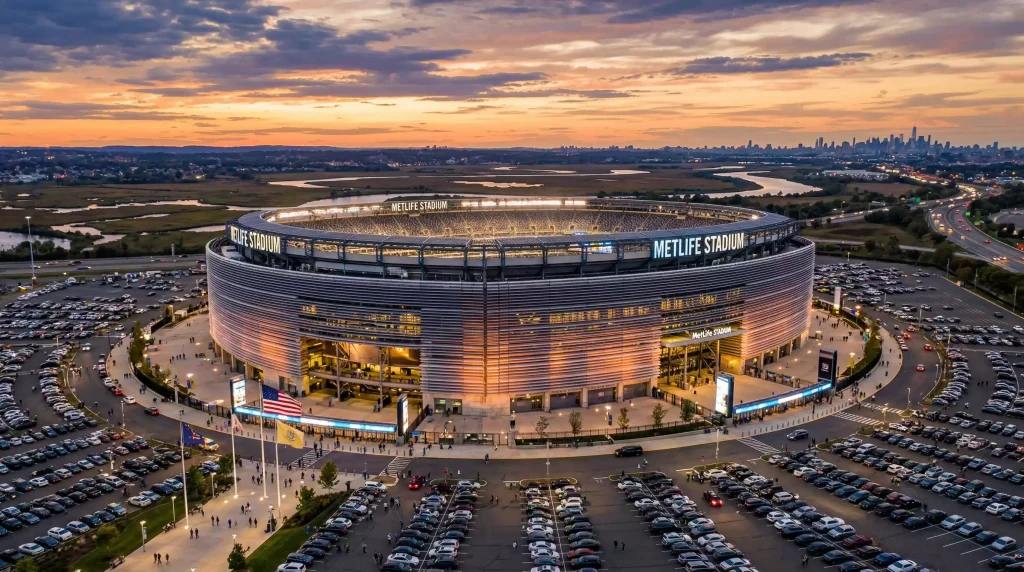
I remember watching the 2014 Super Bowl at MetLife Stadium on television and thinking the venue looked sterile, clinical, more corporate campus than sporting cathedral. That match took place in February, with temperatures hovering near freezing. Now this same stadium will host the biggest football match on Earth in July 2026 — and the irony is not lost on anyone who has followed international football for decades. The World Cup Final at MetLife Stadium represents both a bold statement about American football ambitions and a genuine question mark about whether corporate infrastructure can generate the atmosphere this occasion demands.
For Irish punters preparing to follow the tournament — whether from a pub in Dublin or the stands in New Jersey — understanding this venue matters beyond simple curiosity. The MetLife Stadium World Cup Final will crown a champion, and the conditions, timing, and setting will influence how that match unfolds. Everything from pitch dimensions to local weather patterns affects the betting calculus for the tournament’s climax.
The Venue That Billionaires Built
Walk into any discussion about modern American stadiums and the conversation inevitably turns to money. MetLife Stadium cost $1.6 billion to construct when it opened in 2010, making it among the most expensive sporting venues ever built at that time. The New York Giants and New York Jets — both NFL franchises — share the facility, a unique arrangement that reflects the economic realities of professional American football. Neither team could justify building a venue this size independently, so they partnered on a structure that serves neither team’s colours exclusively.
The stadium sits in East Rutherford, New Jersey, technically outside New York City despite both tenant teams carrying the New York name. This geographic peculiarity matters for 2026 — fans travelling to the World Cup Final will fly into Newark Liberty International Airport or JFK, then navigate transit systems or traffic to reach the Meadowlands Sports Complex. For Irish supporters making the journey, the logistics differ significantly from European finals typically held in city-centre stadiums with established public transport links.
Capacity for the World Cup Final will reach approximately 82,500, though FIFA configurations may adjust this figure slightly depending on broadcast requirements and hospitality allocations. The stadium features an open roof design, exposing the pitch to weather conditions — a factor that becomes relevant given New Jersey’s July climate. Average temperatures in late July hover around 30 degrees Celsius, with humidity levels that can make conditions feel considerably warmer. Players accustomed to European summer football will find themselves in something closer to a tropical environment.
The playing surface underwent significant preparation for 2026. NFL stadiums traditionally use artificial turf to accommodate American football’s punishing schedule, but FIFA mandates natural grass for World Cup matches. MetLife Stadium will install a temporary grass system similar to approaches used in previous tournaments, giving the pitch adequate time to establish before the competition begins. The quality of temporary grass surfaces has improved dramatically since early experiments, though they remain distinct from permanent installations at venues like Wembley or the Stade de France.
Why MetLife Is the Right Choice for the Final
Critics of American stadium culture often miss the genuine strengths these venues bring to major events. MetLife Stadium offers infrastructure that most European grounds cannot match — 100 private suites, 10,000 club seats, and hospitality areas that can accommodate FIFA’s corporate requirements without displacing regular supporters. The commercial apparatus that makes American sports profitable also provides the logistical backbone for hosting 80,000 people in relative comfort.
The New York metropolitan area represents the largest media market in the United States, giving the World Cup Final exposure that few other locations could match. Broadcasting infrastructure already exists from years of high-profile NFL games, meaning production teams will operate in familiar territory. For a tournament that FIFA hopes will cement football’s place in American culture, staging the final near New York carries symbolic weight that Phoenix or Houston could not replicate.
Transportation capacity actually exceeds what many European finals can offer, despite perceptions to the contrary. The New Jersey Transit rail line serves the stadium directly, and the venue has hosted combined attendance of over 160,000 across double-header events. Parking infrastructure accommodates approximately 28,000 vehicles, reflecting American transportation preferences even as organisers encourage public transit. Irish fans arriving via Newark will find the journey manageable, though considerably longer than the walk from Dublin city centre to the Aviva Stadium.
Security and crowd management at MetLife Stadium benefit from years of NFL experience. American sporting events operate with extensive security protocols, and the venue has hosted Super Bowls, major concerts, and international football friendlies without significant incidents. FIFA’s security requirements are substantial for any World Cup Final, and MetLife’s existing infrastructure reduces the improvisation that smaller venues would require. The controlled environment may feel over-managed compared to European football culture, but it provides genuine operational advantages for an event of this magnitude.
The Critics — Is It the Right Setting?
Football purists have legitimate concerns about staging the World Cup Final in a stadium built for a different sport. The sightlines at MetLife reflect American football’s field dimensions, meaning sections of seating sit further from the touchlines than purpose-built football grounds. Supporters in corner sections will watch the match from distances that would feel alien in European venues, where every seat claims proximity to the action as a selling point.
The atmosphere question looms largest. American sporting events operate on a different model than European football, with constant entertainment during stoppages, amplified music, and coordinated crowd prompts that many football supporters find antithetical to organic atmosphere. MetLife Stadium lacks the steep, close-to-pitch stands that generate the acoustics of Anfield or Signal Iduna Park. The bowl design disperses sound rather than concentrating it, and 80,000 voices may produce less intimidating noise than 55,000 in a purpose-built football cathedral.
Some critics point to the American premium on comfort over intensity. MetLife Stadium offers spacious concourses, ample concession stands, and facilities that prioritise the consumer experience. European football stadiums, by contrast, often cram supporters into compact spaces where the collective energy builds through proximity. Whether the World Cup Final should feel like a premium entertainment experience or a gladiatorial sporting contest remains a matter of perspective, but the venue clearly optimises for the former.
The timing also invites scrutiny. A July evening in New Jersey will see the sun setting during the second half of a standard kick-off, creating lighting conditions that television producers love but players may find challenging. The transition from daylight to floodlights affects depth perception and can influence how matches unfold in decisive moments. European finals typically benefit from consistent evening lighting conditions that MetLife’s open roof and late-summer positioning cannot guarantee.
World Cup 2026 Matches at MetLife Stadium
The World Cup Final on 19th July 2026 headlines MetLife Stadium’s tournament schedule, but the venue will host matches throughout the competition. Group stage fixtures, Round of 32 matches, and at least one quarter-final will take place in East Rutherford, giving the stadium approximately eight matches across the tournament. The exact allocation depends on FIFA’s final scheduling, which accounts for television windows and team rest periods.
Group stage matches at MetLife will feature high-profile nations, as FIFA typically assigns major venues to matches expected to draw significant attendance and television audiences. While the full schedule remains subject to confirmation, expect matches involving traditional football powers rather than debutant nations. The commercial logic of placing Brazil, Argentina, or England at MetLife during group play is too compelling to ignore.
For Irish supporters, the timing of MetLife matches requires careful attention. East Rutherford operates on Eastern Daylight Time during summer, five hours behind Irish Summer Time. A match kicking off at 18:00 local time begins at 23:00 in Dublin — late, but not impossible for dedicated viewers. The final itself will likely commence around 20:00 local time, meaning a 01:00 start for Irish audiences. Plan accordingly.
The semi-finals take place at other venues — SoFi Stadium in Los Angeles and AT&T Stadium in Dallas host those matches. This means MetLife Stadium’s schedule builds toward the final without exhausting the pitch or the local infrastructure through excessive late-stage fixtures. The venue essentially rests after the quarter-final round before preparing for the tournament’s climax, allowing groundskeeping staff to optimise pitch conditions.
Travelling From Ireland — What to Know
Direct flights from Dublin to Newark operate daily on multiple carriers, with flight times around eight hours eastbound. Newark Liberty International Airport sits approximately 20 kilometres from MetLife Stadium, making it the logical arrival point for Irish supporters attending matches. The airport’s proximity reduces the American logistical sprawl that makes other World Cup venues more complicated to access.
Accommodation in Manhattan offers the cultural experience most visitors seek, but staying in New Jersey reduces match-day travel significantly. Hotels in Secaucus, Jersey City, or Hoboken provide access to transit links while avoiding Manhattan’s premium pricing. For supporters planning multiple matches at MetLife, strategic accommodation choices can prevent exhausting daily commutes across the Hudson River. East Rutherford itself has limited hotel inventory, so booking early remains essential.
The cost equation for Irish supporters attending the final deserves sober assessment. Flight prices during peak World Cup demand will exceed standard summer rates significantly. Final tickets, should Ireland somehow qualify a supporter for that allocation, will carry four-figure price tags at minimum. Budget-conscious supporters might find better value attending group stage matches and watching the final from Manhattan, where the atmosphere in Irish pubs will rival anything in Dublin.
Currency considerations favour preparation. The euro-to-dollar exchange rate fluctuates, and American tipping culture adds 15-20% to most restaurant and service costs. MetLife Stadium’s concession prices reflect New York-area premiums — expect to pay $15 or more for a beer and similar amounts for food. Bringing cash for smaller transactions and understanding American card payment systems will smooth the experience considerably.
Final Venue and Betting Implications
The MetLife Stadium environment creates specific conditions that sharp punters should factor into final match analysis. The natural grass surface installed for the tournament may play differently than the pitches teams encountered in group stages at other venues. Some stadiums in the tournament will feature established grass systems, while others use temporary installations of varying quality. By the final, teams will have adapted to multiple surface conditions, but the MetLife pitch will still present its own characteristics.
Weather variables deserve particular attention. July heat in New Jersey affects player stamina, and FIFA’s cooling breaks — introduced for extreme conditions — may come into play. Teams with deeper squads and effective rotation during earlier rounds will arrive at the final with fresher legs. The late evening kick-off mitigates the worst heat, but humidity persists after sunset. South American and African teams accustomed to warm-weather football may hold physiological advantages over northern European nations.
The neutral venue dynamic affects how teams approach the final. Unlike European finals where supporter allocations skew toward one nation, MetLife will feature a more balanced crowd composition unless one finalist is the United States. American neutrals purchasing tickets will create an atmosphere distinct from traditional World Cup finals, potentially reducing the home-crowd advantage that has influenced previous tournaments. This neutrality may favour technically superior teams over those relying on atmospheric intimidation.
Market movements in the weeks before the final will reflect these venue-specific factors. Books may adjust lines based on confirmed weather forecasts, injury situations exacerbated by tournament wear, and public betting patterns from American audiences new to football wagering. Sharps who understand MetLife’s particular conditions can identify value that casual bettors miss — the venue is not just a location, but an active variable in how the match unfolds.
Our Take on the World Cup Final Venue
MetLife Stadium is not the romantic choice for football purists. The Maracanã, Wembley, Santiago Bernabéu — these venues carry historical weight that a New Jersey stadium simply cannot match. But romance does not determine match outcomes, and the practical realities of MetLife deserve fair assessment alongside the aesthetic objections.
The venue will deliver a functional, well-organised World Cup Final with excellent broadcasting infrastructure and adequate supporter facilities. It will not generate the atmospheric intensity of South American stadiums or the historical resonance of European cathedrals. For Irish supporters watching from home, these distinctions matter less than they might seem — the television product will be identical regardless of venue character, and the match itself remains the central drama.
From a betting perspective, the MetLife final presents neither significant advantage nor disadvantage for any particular finalist. The neutral American setting, warm conditions, and temporary pitch surface create variables that affect all participants equally. Sharp analysis of squad depth, tournament form, and tactical matchups will matter more than venue-specific factors. The stadium is the stage, not the script.
If Ireland’s neighbours Scotland or England reach the final — admittedly ambitious projections in both cases — Irish supporters may find themselves making the Newark journey despite the considerable expense. The prospect of watching a British Isles nation contest the World Cup Final in person carries appeal that transcends venue criticism. MetLife Stadium would feel considerably more atmospheric if 20,000 Irish, Scottish, or English voices were contributing to the occasion.
