
 Available in US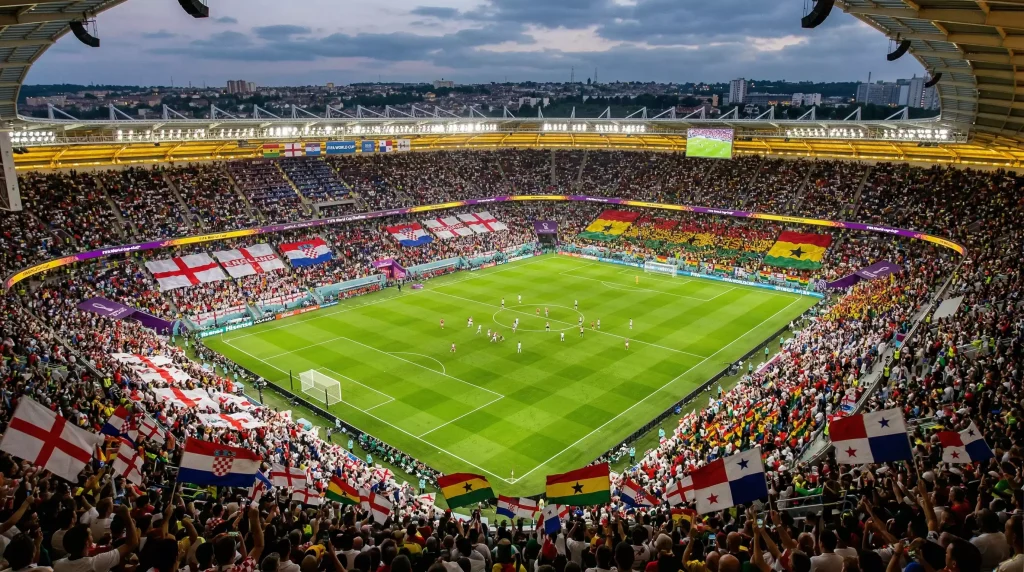
England’s World Cup 2026 Group L draw generated the kind of relieved exhale usually reserved for medical all-clears. Croatia without their golden generation at full strength, Ghana rebuilding after recent disappointments, Panama as comfortable underdogs — this looked like the path to the knockout stages that English fans had dreamed about. Then I checked Croatia’s actual squad situation and realised the narrative might need adjusting.
The apparent ease of Group L conceals several betting angles that casual observers miss entirely. England carry immense pressure as perpetual underachievers at major tournaments. Croatia’s core players remain dangerous regardless of age-related concerns. Ghana possess the individual talent to cause upsets on any given day. Panama will make opponents work for every goal. What looks like a procession on paper could become something messier in reality, and messier scenarios create betting value.
England Arrive with Tournament Pressure That Never Relents
The burden of 1966 weighs heavier with each passing tournament. England have reached two European Championship finals in the past four years, losing both in agonising fashion. The World Cup semi-final in 2018 and quarter-final in 2022 demonstrated progress, yet the trophy cabinet remains stubbornly empty. This golden generation of English talent faces mounting pressure to convert potential into silverware before the window closes.
Jude Bellingham has evolved from prodigious talent to genuine world-beater since arriving at Real Madrid. His Champions League performances demonstrate the composure and quality that tournament football demands. Bukayo Saka continues his ascension as one of Europe’s premier wingers, while Phil Foden finally looks comfortable translating club form to international settings. Harry Kane remains the focal point — England’s all-time leading scorer seeking the one trophy that defines careers.
The defensive concerns that plagued previous England tournaments have partially resolved. John Stones and a rotating cast of centre-back partners provide reasonable stability, though vulnerability to pace remains a recurring theme. Kyle Walker’s declining speed raises questions about the right-back position, where younger alternatives lack his experience. Declan Rice anchors the midfield with the kind of defensive intelligence that allows creative players freedom to express themselves.
Manager Gareth Southgate, assuming he remains in post through the tournament, has transformed England’s tournament mentality from perennial underachievers into genuine contenders. His pragmatic approach frustrates purists who desire more attacking football, but results vindicate the methodology. England now expect to reach knockout stages rather than hoping to survive them. Group L provides an opportunity to build momentum without the stress of early elimination scenarios.
The betting markets price England at approximately 7/1 for outright World Cup victory — third or fourth favourites depending on market movement. This reflects both their squad quality and the favourable path Group L provides. Reaching the quarter-finals appears highly probable; progressing beyond depends on which opponents emerge from other groups. The draw could see England avoid France and Argentina until the semi-finals, creating a genuine pathway to the tournament’s final weekend.
Croatia Face the Question Every Ageing Champion Must Answer
The 2018 World Cup final team that pushed France to extra time before succumbing has inevitably aged. Luka Modrić, the orchestrator of that remarkable run, turned 40 earlier this year and continues defying biological reality at Real Madrid. Ivan Perišić, Marcelo Brozović, and Dejan Lovren from that core have either retired or declined significantly. The question facing Zlatko Dalić is whether Croatia can remain competitive with Modrić’s brilliance surrounded by lesser talents.
The evidence from recent tournaments suggests yes, despite logical expectations. Croatia finished third at the 2022 World Cup, defeating Morocco in the third-place playoff after a penalty shootout semi-final loss to Argentina. Their 2024 European Championship performance was more modest — group stage elimination following draws against Spain and Italy. The trajectory points downward, but this remains a team capable of significant moments against anyone.
Beyond Modrić, Croatia possess genuine quality in specific positions. Joško Gvardiol has emerged as one of world football’s elite centre-backs, his performances at Manchester City justifying the significant transfer fee. Mateo Kovačić provides experienced midfield partnership alongside Modrić when fitness allows. The attacking options have refreshed — younger players like Lovro Majer and Martin Baturina offer creativity that keeps Croatia dangerous on transitions.
Drawing England immediately presents Croatia with their most difficult fixture. The 2018 semi-final victory remains fresh in English consciousness, adding emotional weight to the tactical battle. Croatia will approach this match with characteristic defiance, refusing to accept the underdog role their recent trajectory suggests. Whether that spirit translates into results against England’s current quality is another matter.
The Group L dynamics favour Croatia’s qualification prospects. Even losing to England, they should have enough quality to defeat Ghana and Panama. Third place and potential progression through the expanded format provides a safety net that previous World Cups denied. Current odds around 7/4 for Croatia to qualify appear reasonable given their pedigree, though second place behind England looks the realistic ceiling rather than genuinely challenging for group leadership.
Ghana Bring Unpredictability That Cuts Both Ways
African football teaches harsh lessons about assuming outcomes based on FIFA rankings and recent form. Ghana’s World Cup history includes quarter-final appearances and dramatic near-misses alongside embarrassing early exits. Their current squad possesses the individual talent to surprise anyone while maintaining the organisational inconsistency that undermines tournament ambitions.
The Black Stars’ attacking options draw from elite European clubs. Mohammed Kudus has established himself as a genuine star at West Ham, his direct running and goalscoring threat creating chances from nothing. Antoine Semenyo provides pace and power on the flanks. Thomas Partey, when fit and focused, remains one of the Premier League’s most complete midfielders. Jordan Ayew’s experience provides a reliable option, though age has diminished his explosive attributes.
Defensively, Ghana present more questions than answers. The centre-back pairings have rotated frequently under various managers, creating uncertainty about first-choice partnerships. Goalkeeper Jojo Wollacott has developed from non-league origins to international starter, an improbable journey that speaks to Ghanaian football’s unorthodox player pathways. The defensive organisation against organised opponents remains a concern that better teams will exploit.
Ghana’s 2022 World Cup campaign ended in group stage elimination despite a victory over South Korea. Portugal and Uruguay proved too strong, exposing the defensive vulnerabilities that persist today. The lessons from that tournament should inform tactical approaches in Group L, though whether the current coaching setup can implement necessary changes remains uncertain following managerial turnover.
For betting purposes, Ghana represent volatility incarnate. They could beat Croatia with a brilliant counter-attacking display, then lose to Panama through defensive lapses. Current odds around 5/2 for Ghana to qualify from Group L reflect this uncertainty appropriately — not favoured, but far from dismissed. Match betting involving Ghana should account for scoreline volatility; these are not matches that produce predictable outcomes.
Panama Complete the Group with Limited Upset Potential
Panama qualified for their second World Cup following the breakthrough tournament in Russia 2018. That debut campaign produced zero points and a minus-nine goal difference against Belgium, England, and Tunisia. The experience provided valuable lessons about the gap between CONCACAF qualification and World Cup performance levels.
The current squad features primarily domestic-based players alongside Major League Soccer regulars. Eric Davis and Andrés Andrade provide MLS-quality attacking options without threatening world-class opposition. José Fajardo offers international experience accumulated over a decade representing Panama, though his peak years have passed. This is a team built on organisation and spirit rather than individual brilliance.
Manager Thomas Christiansen, the former Leeds United boss, brings European tactical awareness to Panama’s approach. His system emphasises defensive shape and counter-attacking discipline — the only viable approach against superior opponents. Panama will not control matches against England, Croatia, or Ghana; they will attempt to survive extended pressure and punish lapses.
The Group L draw represents Panama’s nightmare scenario. England are exactly the type of clinical team that punishes defensive errors. Croatia possess the midfield quality to unpick compact blocks. Ghana’s pace and power create problems that organisation alone cannot solve. Zero points and a repeat of the 2018 experience appears most likely, though the expanded format offers slim hope of third-place progression if results elsewhere create unusual scenarios.
Betting on Panama requires extreme caution. Their matches against the big three will see heavy favourite prices with minimal value in backing the underdogs. Panama to score in any match offers marginal interest at approximately 3/4, reflecting that even outclassed teams typically create at least one genuine chance. Avoid outright backing Panama for qualification — the implied probability at available odds far exceeds realistic chances.
Group L Fixtures Create Distinct Irish Viewing Challenges
The North American hosting arrangement affects Irish viewers differently across Group L fixtures. England matches will attract primetime US scheduling, pushing kickoffs into the early hours of Irish Summer Time. Understanding the timing helps plan both viewing arrangements and live betting approaches.
England versus Croatia opens Group L with perhaps the most anticipated fixture. FIFA will schedule this for maximum US audience — expect an 8:00 PM Eastern Time kickoff translating to 1:00 AM IST. The late timing limits casual viewing but creates opportunities for dedicated punters accessing live markets when casual bettors have gone to bed.
The Ghana fixtures offer slightly more accessible timing possibilities. Their opener against Panama could fall in an earlier slot, potentially around 11:00 PM IST depending on FIFA’s venue allocations. England versus Ghana and Croatia versus Ghana will follow similar patterns based on broadcast priorities.
The final matchday’s simultaneous kickoffs present the usual viewing challenges. England versus Panama and Croatia versus Ghana begin at the same moment, forcing choices between screens or creative multi-device arrangements. By this stage, the qualification picture should be largely settled unless upsets have thrown calculations into chaos.
For Irish punters, the late-night England fixtures represent both challenge and opportunity. Market liquidity remains strong given England’s massive betting interest, but the timing means fewer casual punters influencing in-play prices. Shrewd observers can identify value when markets overreact to early match developments without full context.
Qualification Scenarios Favour England But Leave Room for Drama
England should win Group L. The statement carries more confidence than similar predictions elsewhere in this tournament because the quality differential genuinely justifies it. England’s squad value exceeds Croatia’s by a factor of three or more, with similar margins against Ghana and Panama. Upsets occur in football, but consistent upsets across three group matches would require extraordinary circumstances.
The most likely scenario sees England taking nine points from three victories, Croatia finishing second with six points from wins over Ghana and Panama, Ghana third with three points from a Panama victory, and Panama bottom without points. This straightforward outcome provides the baseline against which other scenarios should be evaluated.
Croatia’s challenge to England for first place requires winning their direct encounter — difficult given recent form but not impossible given their historical pedigree in this fixture. A Croatia victory over England would genuinely contest group leadership, particularly if England subsequently draw with Ghana or struggle to a narrow Panama win. The 1-0 Croatia victory in Russia 2018’s semi-final demonstrated they can defeat England when stakes are highest.
Ghana’s path to qualification runs through third place and the best third-place provisions. Defeating Panama while taking a point from either England or Croatia would put them in strong position. Ghana’s unpredictability makes this scenario genuinely possible — they could draw with Croatia through sheer attacking chaos, or they could lose all three matches through defensive disorganisation. The variance makes prediction difficult beyond establishing broad probability ranges.
Panama’s qualification would require results so improbable that betting markets correctly price them as virtual impossibilities. They would need to take points from multiple stronger opponents while hoping for bizarre results elsewhere. Even the expanded format’s third-place pathway remains effectively closed given the group’s composition.
England’s Dominance Appears Overwhelming but History Warns Against Certainty
The case for England cruising through Group L relies on observable quality differentials. Bellingham, Saka, Foden, and Kane represent attacking talent that exceeds anything their opponents can field. The midfield organization under Rice provides stability that tournament football demands. Defensive concerns exist but appear manageable against Group L’s attacking threats.
England’s tournament preparation benefits from the favourable draw. Where other favourites face immediate tests — France drew Senegal, Brazil drew Morocco — England can build momentum against progressively less threatening opponents. The psychological advantage of expected victory creates freedom that pressurised environments deny. Southgate’s players should enter knockout stages with confidence rather than anxiety.
Squad depth adds another dimension. England’s second-choice players would start for most Group L opponents. Injury or suspension to key players would not necessarily derail qualification the way it might for Croatia or Ghana. This resilience across the squad provides insurance that other nations in the group cannot match.
Yet English football history counsels against certainty. The 1950 defeat to USA, the 1988 European Championship disaster, Euro 2016’s Iceland humiliation — England have produced inexplicable results against theoretically inferior opponents repeatedly. The pressure of expectation creates tension that technical superiority cannot always overcome. Group L’s apparent ease could itself become a psychological burden if results do not immediately confirm dominance.
Current market pricing reflects appropriate confidence. England to win Group L trades at approximately 2/7 — short enough that value exists only for those with absolute conviction. England to qualify sits at prohibitive odds around 1/14, offering no meaningful return. The interesting angles involve England margins and match-specific propositions rather than binary qualification outcomes.
Croatia’s Quality Deserves More Respect Than Markets Offer
The narrative of Croatian decline has overshadowed continued tournament competitiveness. Third place at the 2022 World Cup came against expectations that their ageing squad would falter. The 2024 European Championship group stage exit aligned more with expectations, but draws against Spain and Italy demonstrated that this team cannot be dismissed regardless of results elsewhere.
Modrić’s continued brilliance provides the foundation for Croatian hopes. His reading of the game, passing range, and competitive spirit show minimal decline despite his age. Surrounding Modrić with adequate supporting cast falls to Dalić’s squad selection, and the available options — while inferior to England’s riches — remain tournament-calibre players.
Gvardiol’s development into a genuine world-class defender provides Croatia’s most valuable asset after Modrić. His ability to play out from the back suits Croatian possession philosophy while his defensive qualities address historical vulnerabilities. Building around Gvardiol for the post-Modrić era makes tactical sense, though the transition remains incomplete.
The England fixture determines Croatia’s group stage ceiling. Victory would create genuine competition for first place; defeat likely relegates them to second-place consolidation against Ghana and Panama. The 2018 precedent provides psychological ammunition, though England’s current squad exceeds that tournament’s version in multiple positions.
Betting value on Croatia exists in specific markets. Croatia to qualify at 7/4 offers reasonable return given their pedigree and the expanded format’s third-place provisions. Croatia versus England draw at approximately 7/2 represents interesting value given Croatian ability to frustrate superior opponents. Avoid backing Croatia to win the group at approximately 9/2 — England’s quality makes this outcome improbable without English collapse.
Group L Betting Markets Offer Limited but Real Value
The group’s apparent predictability narrows value opportunities compared to more competitive groups. Nevertheless, specific markets contain mispricing that systematic analysis reveals.
England versus Croatia provides the most interesting betting proposition. The match price sees England around 4/5, draw approximately 5/2, Croatia around 7/2. England’s price appears fair given quality differential, but the draw price underrates Croatian ability to frustrate and condense matches. I see value at 5/2 for a tight, tactical encounter that neither team forces.
Croatia versus Ghana should produce goals from both teams. Ghanaian defensive vulnerabilities meet Croatian attacking intent; Ghanaian counter-attacking threat meets Croatian defensive lapses. Both teams to score in this fixture at approximately 4/5 offers marginal value worth considering. The match outcome itself proves harder to call — Croatia are favourites but Ghana’s volatility creates genuine upset potential.
England’s margin of victory against Panama deserves attention. England to win by three or more goals at approximately 6/5 reflects likely scoreline ranges against overwhelmed opponents. Panama’s defensive organisation will frustrate for periods, but quality gaps this large typically produce emphatic results once breakthroughs occur. Similar logic applies to Croatia versus Panama, though Croatian margins historically prove tighter than quality suggests.
Total goals markets across Group L fixtures should trend toward overs in most matches. England’s attacking intent creates open games. Ghana’s chaotic approach produces scoring at both ends. Only the Croatia versus England fixture projects as potentially low-scoring, with both managers likely prioritising structure over adventure.
The group winner market prices England at 2/7, Croatia at 9/2, Ghana at 16/1, Panama at 150/1. No value exists backing England at those odds; you risk significant capital for minimal return. Croatia at 9/2 requires England underperformance — possible but not probable enough to justify the odds. Ghana and Panama represent hopeless causes at any price.
Irish Punters Should Approach Group L with Specific Strategy
Group L’s relatively predictable nature suits specific betting approaches better than others. The following recommendations synthesise analysis into actionable positions for those seeking tournament interest through this group.
England versus Croatia draw at 5/2 represents the single best value proposition in Group L markets. The fixture dynamics favour tactical caution from both managers in an opening game where neither wants to fall behind. Croatia’s pedigree against England and their defensive organisation under Dalić creates conditions where draws naturally occur.
Ghana to qualify at 5/2 offers reasonable value for punters seeking third-place pathway bets. Their individual talent can produce results against Croatia or Panama; the expanded format means third place could suffice. The variance in Ghanaian performance makes this genuinely uncertain rather than the near-certainty that England qualification represents.
Avoid betting England to win the group at 2/7. The potential return fails to justify the risk, however small that risk appears. Better opportunities exist elsewhere in the tournament; tying up capital on near-certainties reduces flexibility for more valuable positions later.
Consider total goals overs in Ghana fixtures. Their attacking talent and defensive vulnerabilities create goal-rich environments. Ghanaian matches at previous tournaments have produced memorable scorelines; expect similar patterns in Group L.
For Irish viewers primarily interested in watching competitive football, Group L offers less intrigue than groups like C or I. The England versus Croatia opener represents the only genuinely uncertain fixture; subsequent matches should follow predictable patterns. Those seeking entertainment might focus attention elsewhere while using Group L positions as value extraction rather than engagement sources.
